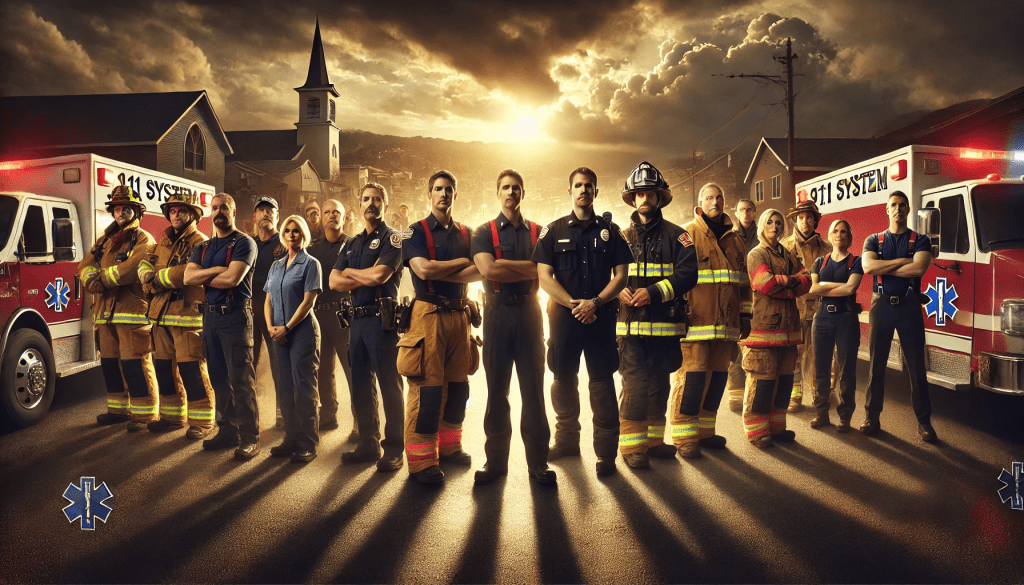
Imagine a world without the 911 system. A world where emergencies relied on word-of-mouth or outdated technology, with response times stretching into hours instead of minutes. It’s not some far-off dystopian concept—this was reality less than a century ago.
In Maine, the 911 system as we know it today only came into existence in the 1970s. Before that, the state relied on what was called the “red phone system.” Red phones, located in specific public locations, were hardwired to contact a trained responder’s home directly. There were no cell phones, no coordinated networks—just landlines and limited accessibility.
In those days, people were far more likely to die before reaching medical care. Fires destroyed homes more frequently because of delayed response times and limited resources. And yet, first responders stepped up, even in those challenging conditions. They became a lifeline, often volunteering their time to serve their communities because they understood the stakes.
Flash forward to today: technology has advanced, our equipment has improved, and the 911 system is a highly coordinated network capable of dispatching fire, police, and EMS to nearly any corner of the country. But our system is under immense pressure.
With a wave of retirements looming and fewer individuals interested in entering the field, the future of emergency response looks uncertain. Those who do step into first responder roles often leave after only a few years, disillusioned by low pay, high stress, and a job that rarely matches the glorified image portrayed in movies or TV shows. Many never fully understand what keeps those of us who stay going.
So, why do we keep showing up?
Because Lives Depend on It
Every call has the potential to save a life. Whether it’s reviving someone in cardiac arrest, pulling a child from a burning building, or simply being a reassuring presence in someone’s darkest hour, the work we do matters. We see firsthand what happens when help doesn’t arrive in time—and that knowledge fuels our drive.
Because It’s Who We Are
First responders share a unique bond, rooted in a sense of duty and purpose. We’re not just responding to emergencies; we’re showing up for our communities in their most vulnerable moments. That sense of responsibility becomes a part of who we are.
Because We Believe in a Greater Good
Even in a system stretched to its limits, we show up because we know the alternative is unacceptable. The thought of a world where 911 calls go unanswered or delayed for hours is unfathomable. We believe in protecting the system that has become a lifeline for so many.
Because We’re Proud of Our Legacy
First response is a tradition. For decades, people have stepped up to serve in this field, often at great personal cost. We carry that torch, honoring the sacrifices of those who came before us.
Because We’re Not Done Fighting
Yes, there are challenges—staffing shortages, burnout, and a lack of resources. But for those of us who stay, there’s a drive to be part of the solution. We want to leave this field better than we found it, to advocate for change, and to inspire the next generation of responders to pick up where we leave off.
The Road Ahead
The future of emergency response is at a crossroads. Without intervention—better pay, better mental health support, and better recruitment efforts—the system could face collapse. But if we’ve learned anything from history, it’s that first responders have always risen to the challenge.
To those of you considering this field: It won’t be easy, but it will be worth it. You’ll find a sense of purpose unlike anything else. And you’ll join a community of people who show up, day after day, not because it’s easy, but because it’s needed.
For those of us already in the field, let this be a reminder: what we do matters. We are part of something greater than ourselves.
And that’s why we keep showing up.
 Mind Over Mayday
Leave a comment