Tag: family

  • Mentorship in EMS: Lessons from My Relationship with Ron Morin

    Mentorship in EMS: Lessons from My Relationship with Ron Morin

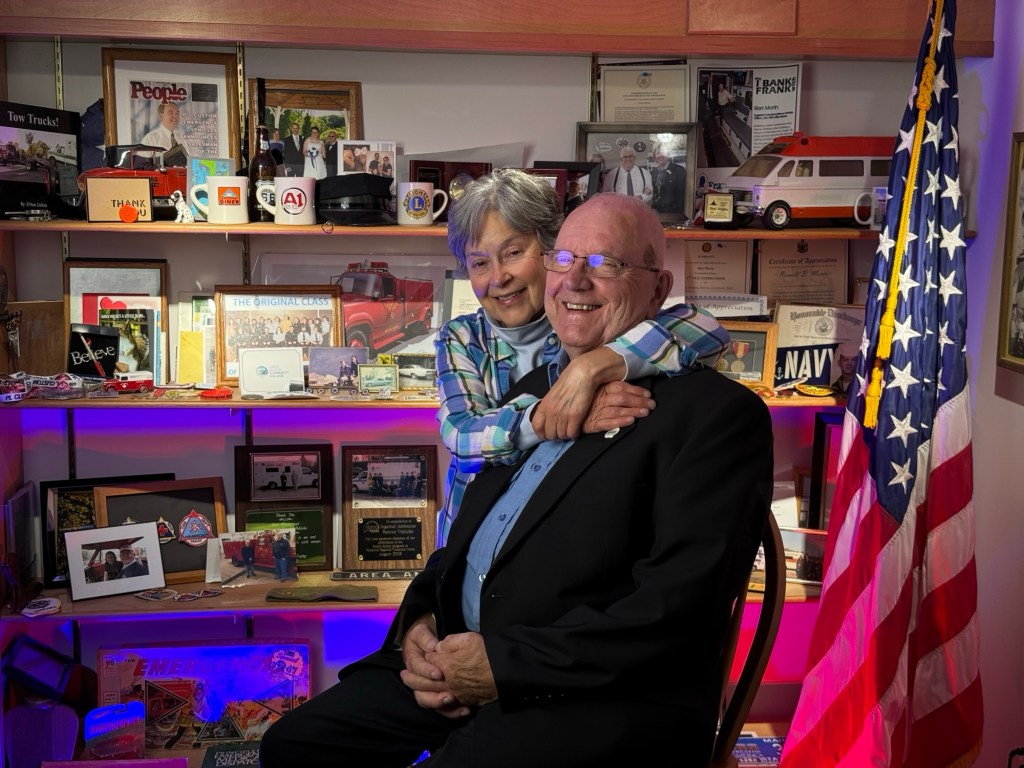
    Mentorship is a cornerstone of growth in any field, but in Emergency Medical Services (EMS), where the stakes are high and the learning curve is steep, it can be transformative. For me, mentorship came in the form of Ron Morin—a pioneer in Maine EMS whose career spanned over four decades, starting with the state’s very first paramedic program. His passion for the field didn’t stop with patient care; it extended to ambulance design, regional sales, education, and advocacy. But our story didn’t begin in the thick of his career. It started after Ron and his wife Becky, a paramedic and nurse practitioner, had retired—a time when I was just starting my journey as an EMT.

    At the time, I was still figuring out my path in healthcare and emergency medicine. Meeting Ron and Becky couldn’t have come at a better time. Their thoughtful guidance, experience, and unwavering encouragement became a steadying force in my life. As our relationship grew, so did the depth of their impact on me. Today, I’m proud to call them my chosen grandparents—a title they’ve earned through years of offering love, support, and wisdom.

    A New Chapter: Touring and Writing with Ron

    One of the most rewarding aspects of my mentorship with Ron has been our work together on the Squad 51 History and Education Project, his nonprofit educational initiative. Touring the Northeast with Ron, we’ve worked to inspire new generations of EMS professionals and connect with seasoned veterans who grew up watching the iconic show Emergency! These trips have been more than just professional opportunities—they’ve been lessons in history, community, and the evolution of EMS.

    In 2023, our collaboration deepened when I began working on Ron’s autobiography. As I transcribed his stories, I gained insight into the origins of 911 services in rural Maine, the challenges faced by early paramedics, and the profound dedication it takes to build a system that saves lives. Beyond his professional journey, I’ve learned about the enduring love and partnership he shares with Becky, the resilience they’ve shown through life’s challenges, and their tireless commitment to the EMS community.

    What Ron Taught Me About Mentorship

    Ron’s mentorship has been a masterclass in patience, perspective, and humility. He’s taught me that no matter how advanced our tools or protocols become, EMS is ultimately about people—about their stories, struggles, and triumphs. His advice has helped me become not just a better EMT, but a more compassionate and grounded healthcare provider.

    One of the most profound lessons I’ve learned is the importance of listening—really listening. Whether it’s a patient in crisis, a colleague in need of support, or the wisdom of someone who’s been in the field for decades, listening creates the space for growth and connection.

    It’s also because of Ron and Becky’s encouragement that I found the courage to start this blog, Mind Over Mayday. Sharing my story and advocating for first responder mental health wouldn’t have been possible without their belief in me.

    Why You Should Seek a Mentor in EMS

    Mentorship in EMS isn’t just about passing down technical knowledge; it’s about building relationships that challenge, support, and inspire. Here are a few reasons why finding a mentor could change your career—and your life:

    1. Perspective: Mentors like Ron bring a wealth of experience that helps put the challenges of the job into context. Their stories remind us why we chose this field in the first place.

    2. Guidance: A mentor can help you navigate career decisions, refine your skills, and avoid common pitfalls.

    3. Support: The demands of EMS can be overwhelming, but having someone who understands the unique stressors of the job can make all the difference.

    4. Connection to the Past: Learning from those who’ve shaped the field connects us to its history and inspires us to contribute to its future.

    Honoring the “Dinosaurs” of EMS

    Too often, the wisdom of EMS veterans is overlooked in a field that’s constantly evolving. But the so-called “dinosaurs” of EMS have a depth of knowledge and perspective that no textbook or protocol manual can provide. Their stories are a reminder of how far we’ve come—and how much we still have to learn.

    For me, Ron and Becky have been that bridge between the past and the future, showing me what it means to dedicate your life to a calling. Their mentorship has shaped my career and my perspective, and I’ll forever be grateful for the lessons they’ve taught me.

    So, if you’re new to EMS—or even if you’re not—find a mentor. Seek out someone who inspires you, challenges you, and helps you grow. And when the time comes, pass that knowledge along. Because mentorship isn’t just about becoming better at what you do; it’s about ensuring the next generation is even stronger.

    To Ron and Becky—thank you for everything. Your impact on my life and my career is immeasurable, and I hope to honor it by continuing to learn, grow, and give back.

  • The Emotional Backpack: What We Carry Home After Every Shift

    The Emotional Backpack: What We Carry Home After Every Shift

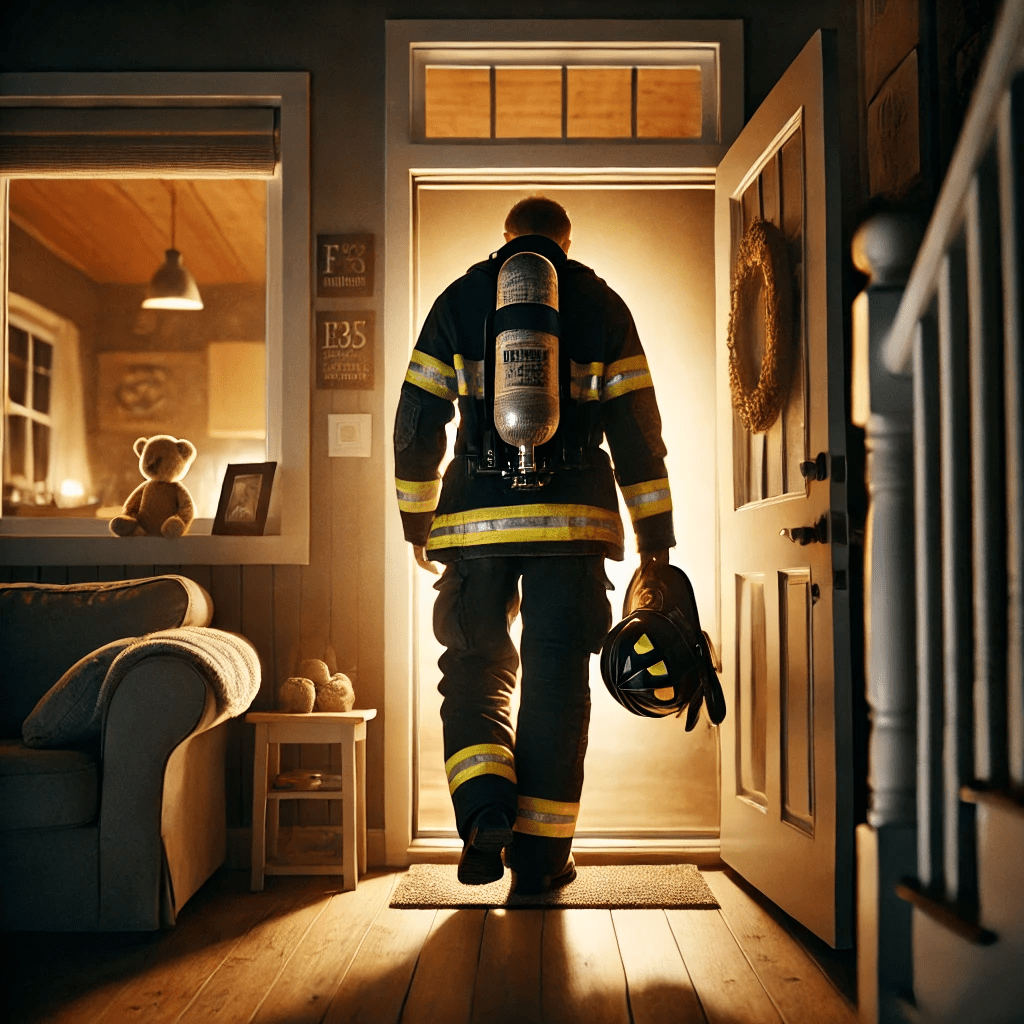
    Every first responder knows the feeling of coming home after a tough shift—the weight that follows you through the door, the mental replay of a critical call, or the silence that fills the space where words fail. This invisible weight, often referred to as “emotional residue,” builds up over time, creating what I call The Emotional Backpack.

    We may not realize how full that backpack is until it spills over, affecting not just our well-being but also our personal relationships.

    What’s in the Backpack?

    Each call we respond to leaves something behind. For some, it’s the heartache of comforting a grieving family. For others, it’s the frustration of a chaotic scene or the stress of making split-second decisions. Even the calls that go “smoothly” can leave behind fatigue and emotional drain.

    We don’t leave these moments behind when we clock out. Instead, they come home with us, shaping how we interact with our loved ones. This can show up as:

    • Irritability or withdrawal: Small things may trigger disproportionate reactions, or we might disengage entirely.

    • Difficulty communicating: It’s not always easy to find the words to explain what we’ve been through—or to decide whether we want to share at all.

    • Emotional unavailability: Being emotionally drained at work can leave little energy for connection at home.

    Over time, this can create distance in our relationships, strain communication, and leave loved ones feeling shut out.

    How to Leave Work Stress at the Door

    While we can’t avoid the emotional impact of the job, we can take steps to manage how much of it we bring home. Here are some strategies to help lighten the load of that emotional backpack:

    1. Create a Transition Ritual

    Give yourself a buffer between work and home. This could be listening to music on the drive, taking a walk, or even sitting quietly for a few minutes before stepping inside. These moments of intentional transition can help you shift gears mentally and emotionally.

    2. Offload the Backpack

    Find ways to process what you’ve been through. Talk to a trusted colleague, write in a journal, or seek professional support if needed. Sharing your thoughts—even if only with yourself—can reduce their weight.

    3. Set Boundaries

    While it’s important to share parts of your workday with your loved ones, it’s equally important to protect your personal space from becoming an extension of your job. Be honest about your need to decompress, but also make space for meaningful connection.

    4. Practice Mindfulness

    Grounding techniques like deep breathing or meditation can help bring you into the present moment, reducing anxiety and helping you leave the intensity of work behind.

    5. Nurture Personal Connections

    Make a conscious effort to engage with your family or friends. Even small acts, like asking about their day or planning quality time, can strengthen bonds and remind you of the support system you have.

    6. Prioritize Self-Care

    Regular exercise, adequate sleep, and balanced nutrition are essential for maintaining emotional resilience. Self-care isn’t selfish—it’s necessary for showing up fully at work and at home.

    The Ripple Effect

    As first responders, we pride ourselves on being strong and dependable. But true strength comes from acknowledging the impact of the job and taking steps to manage it. When we learn to offload some of the emotional residue we carry, we’re not only helping ourselves—we’re showing up better for the people who matter most.

    Your emotional backpack doesn’t have to weigh you down. By practicing self-awareness, setting boundaries, and nurturing personal relationships, you can keep work stress from spilling into your home life, creating space for joy, connection, and peace.

    So, the next time you walk through your door, ask yourself: What am I carrying? And what can I set down?

  • Why We Keep Showing Up: Exploring the Deep Sense of Purpose and Pride in First Responder Work

    Why We Keep Showing Up: Exploring the Deep Sense of Purpose and Pride in First Responder Work

    Imagine a world without the 911 system. A world where emergencies relied on word-of-mouth or outdated technology, with response times stretching into hours instead of minutes. It’s not some far-off dystopian concept—this was reality less than a century ago.

    In Maine, the 911 system as we know it today only came into existence in the 1970s. Before that, the state relied on what was called the “red phone system.” Red phones, located in specific public locations, were hardwired to contact a trained responder’s home directly. There were no cell phones, no coordinated networks—just landlines and limited accessibility.

    In those days, people were far more likely to die before reaching medical care. Fires destroyed homes more frequently because of delayed response times and limited resources. And yet, first responders stepped up, even in those challenging conditions. They became a lifeline, often volunteering their time to serve their communities because they understood the stakes.

    Flash forward to today: technology has advanced, our equipment has improved, and the 911 system is a highly coordinated network capable of dispatching fire, police, and EMS to nearly any corner of the country. But our system is under immense pressure.

    With a wave of retirements looming and fewer individuals interested in entering the field, the future of emergency response looks uncertain. Those who do step into first responder roles often leave after only a few years, disillusioned by low pay, high stress, and a job that rarely matches the glorified image portrayed in movies or TV shows. Many never fully understand what keeps those of us who stay going.

    So, why do we keep showing up?

    Because Lives Depend on It

    Every call has the potential to save a life. Whether it’s reviving someone in cardiac arrest, pulling a child from a burning building, or simply being a reassuring presence in someone’s darkest hour, the work we do matters. We see firsthand what happens when help doesn’t arrive in time—and that knowledge fuels our drive.

    Because It’s Who We Are

    First responders share a unique bond, rooted in a sense of duty and purpose. We’re not just responding to emergencies; we’re showing up for our communities in their most vulnerable moments. That sense of responsibility becomes a part of who we are.

    Because We Believe in a Greater Good

    Even in a system stretched to its limits, we show up because we know the alternative is unacceptable. The thought of a world where 911 calls go unanswered or delayed for hours is unfathomable. We believe in protecting the system that has become a lifeline for so many.

    Because We’re Proud of Our Legacy

    First response is a tradition. For decades, people have stepped up to serve in this field, often at great personal cost. We carry that torch, honoring the sacrifices of those who came before us.

    Because We’re Not Done Fighting

    Yes, there are challenges—staffing shortages, burnout, and a lack of resources. But for those of us who stay, there’s a drive to be part of the solution. We want to leave this field better than we found it, to advocate for change, and to inspire the next generation of responders to pick up where we leave off.

    The Road Ahead

    The future of emergency response is at a crossroads. Without intervention—better pay, better mental health support, and better recruitment efforts—the system could face collapse. But if we’ve learned anything from history, it’s that first responders have always risen to the challenge.

    To those of you considering this field: It won’t be easy, but it will be worth it. You’ll find a sense of purpose unlike anything else. And you’ll join a community of people who show up, day after day, not because it’s easy, but because it’s needed.

    For those of us already in the field, let this be a reminder: what we do matters. We are part of something greater than ourselves.

    And that’s why we keep showing up.

  • The Holidays Through the Eyes of a First Responder: A Different Kind of Celebration

    The Holidays Through the Eyes of a First Responder: A Different Kind of Celebration

    For many, the holidays are a time to gather with family, exchange gifts, and celebrate traditions. But for those of us in the first responder and healthcare community, the meaning of the holidays can look quite different. We don’t always get the luxury of celebrating with our loved ones, and the sights, smells, and memories that come with these special days can often be mixed with the stress, trauma, and demands of our jobs.

    As a first responder, the holidays are a reminder that, while others are cozying up at home with family, we might be in the middle of a shift, answering calls, or working in a hospital, doing our part to care for those in need. Some of us don’t get to experience the holiday cheer when we’re on duty, and for many, this can make the holidays feel intrinsically different from how they may seem to those outside the profession.

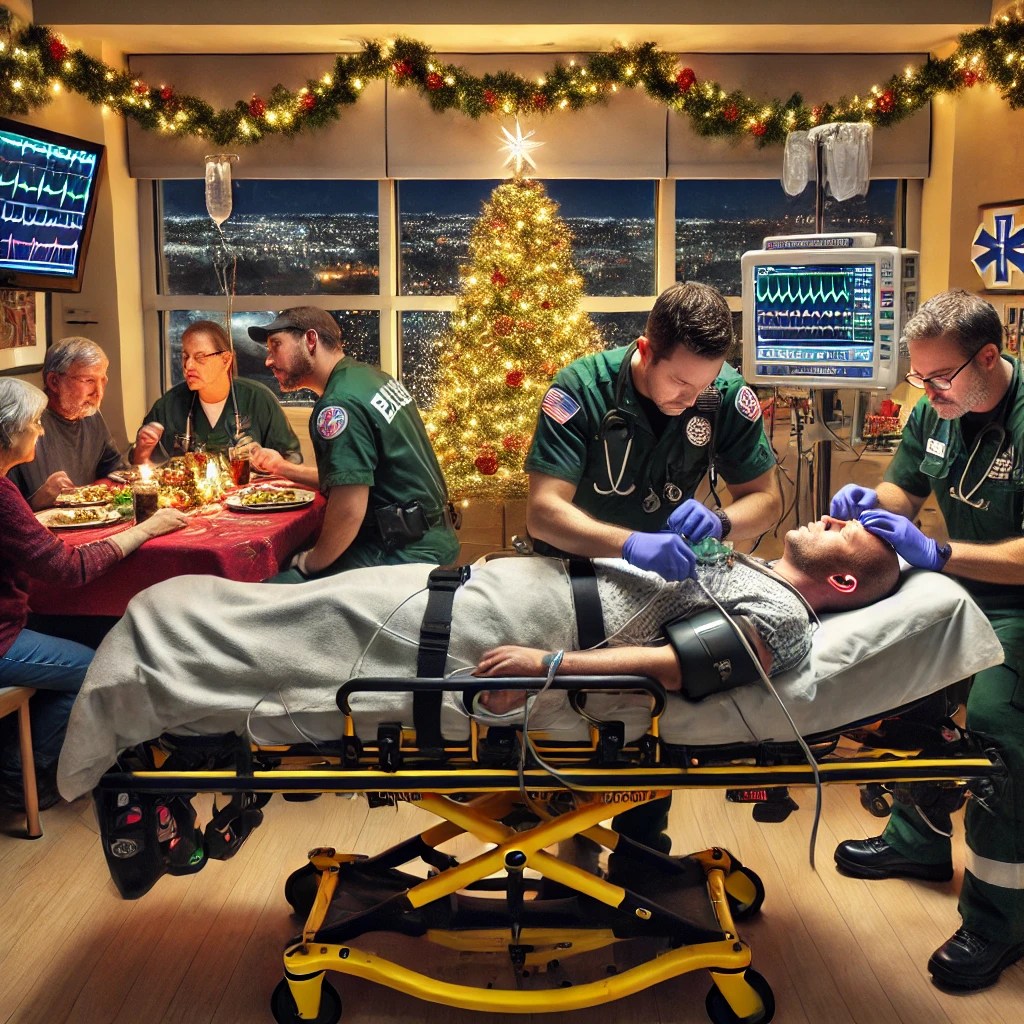
    For example, I’ll never forget the Thanksgiving I worked as an EMT. I responded to a cardiac arrest call that occurred during Thanksgiving dinner. The scene I arrived at was one I’ll never forget: the elderly man’s family was in the middle of a festive meal when he collapsed. Despite our best efforts, he never woke up. As we worked on him, the smell of food lingered in the air—the aroma of mashed potatoes, stuffing, and turkey mixing with the unsettling smell of death. That scent of mashed potatoes stayed with me for a long time after that call, so much so that even the thought of it made me feel nauseous for a while. The experience, unfortunately, became a dark memory associated with what’s supposed to be a joyful day.

    For many of us in the first responder field, this is a reality: we carry the weight of difficult calls and tragic scenes that happen on what should be a celebratory occasion. It’s not uncommon for our work to leave us with heavy memories tied to a holiday, affecting how we approach it in the future.

    What happens when we’re unable to be with our families on the exact day of the holiday? Often, we have to find new ways to celebrate. We shift our celebrations to the days before or after the actual holiday. Our families learn to adapt, making adjustments to their schedules so that we can still come together and create new traditions. It’s not the same as being there in the moment, but it’s the next best thing. This sense of flexibility, and the ability to adjust holiday norms, often becomes an unspoken part of our lives.

    And then there’s the camaraderie we share with our colleagues. Since many of us end up working together during the holidays, we form bonds with the very people we spend most of our time with. Celebrating with colleagues might not feel the same as being with family, but it offers a unique kind of connection. We support each other through the stress of being away from home, and in those moments, we share in the holiday spirit, together. It’s a different kind of celebration—a celebration of resilience, teamwork, and the bonds formed through shared experience.

    This shared sense of unity is what can make the workplace healthier and more positive during the holidays. We know what it’s like to miss out on time with loved ones, so we step up for each other. Sometimes we collaborate on potluck dinners, or plan “secret Santa” and gift exchanges. We look out for one another, offer words of encouragement, and, in a way, create our own family within our team. This is what helps us get through those long shifts and difficult calls while still keeping the holiday spirit alive.

    However, the holidays do come with their own set of challenges. While we’re out there working, we also need to be mindful of the potential risks and accidents that can arise during this festive season. Some common accidents include car crashes from winter weather, fires due to holiday lights or cooking accidents, burns from handling hot food or drinks, and slips and falls from icy sidewalks. As we know all too well, accidents don’t take a holiday, and the stress of dealing with injuries during such a time can add to the emotional weight we carry.

    Here are some helpful tips for first responders and healthcare workers to make the most of the holiday season, even when you’re on the job:

    1. Create New Traditions – The holidays don’t have to be celebrated on the exact day. Adjust your traditions by celebrating before or after your shift. This can help you feel connected to the season, even if you’re working.
    2. Take Small Breaks – If you’re working long hours, carve out brief moments for yourself. A quick walk outside to look at holiday lights, a cup of hot cocoa, or even a few minutes of deep breathing can help you recharge and stay grounded.
    3. Lean on Your Team – The holidays can be tough when you’re away from family, but your colleagues are your second family. Take time to share a laugh, celebrate together, and make the best of the situation. These moments help create a bond that will last beyond the shift.
    4. Find Meaning in Your Work – During the busy holiday season, remind yourself why you do this job. The work you do has a meaningful impact on others, and knowing you’re making a difference can help you feel fulfilled, even if you’re away from home.
    5. Stay Connected Virtually – If you can’t be with your loved ones, take advantage of video calls or texts to stay in touch. Even a quick check-in can help you feel connected and supported.
    6. Practice Self-Care – After a tough call or shift, take time for yourself to decompress. Whether it’s exercising, journaling, or just unwinding with a good book or holiday movie, taking care of your mental health is key to staying balanced during the holidays.
    7. Give Yourself Grace – The holidays may not look like what you imagined, and that’s okay. Be kind to yourself, and recognize that you’re doing your best in a challenging profession. Acknowledge your feelings and give yourself the space to experience them.
    8. Enjoy the Small Moments – Whether it’s the festive decorations in the break room or the smell of holiday treats during a call, appreciate the little moments that bring holiday cheer. These tiny sparks of joy can make a big difference in brightening your day.
    9. Remember You’re Not Alone – Many people in healthcare and first responder roles feel the same way during the holidays. Reach out to your colleagues for support, and remember that we’re all in this together. You’re part of a larger community that understands and appreciates your sacrifices.

    By taking a proactive approach, you can still find ways to make the holidays meaningful—even when you’re working.

    With that in mind, I want to wish everyone a safe and healthy holiday season. Whether you’re working on the frontlines, spending time with family, or creating new traditions, take a moment to appreciate the bonds you share with others. And remember, you’re not alone—whether it’s with your coworkers or the broader first responder community, we’re all in this together.

    Stay safe, stay connected, and let’s continue to support each other during this holiday season and beyond.

  • The Legacies We Leave: Building a Safer, More Peaceful World

    The Legacies We Leave: Building a Safer, More Peaceful World

    When I think about the legacy I hope to leave, my heart is drawn to the idea of creating a safer, more peaceful world. I’ve always wanted to make a difference, not just in my community, but on a larger scale. It’s something that has been deeply rooted in my heart since I became a mother.

    When my son Henry was younger, he was obsessed with Paw Patrol—a show about pups that go on rescue missions, always there to help keep their community safe. I remember watching him light up as the characters worked together to solve problems and protect others. And in those moments, I realized that I wanted to be my son’s real-life “Paw Patrol” hero. It wasn’t just about being there for him; it was about showing him that there’s strength in service and that anyone, regardless of gender or background, can make a meaningful impact.

    As a female in the male-dominated world of first responders, I hope to inspire my daughter, Alice, to see that there are no limits to what she can accomplish. I want her to grow up knowing that the world is full of possibilities, and that she can break down any barriers she encounters on her own path.

    I’ve always felt a calling to give back to the field that has saved my life countless times. My work as an EMT and firefighter isn’t just about responding to emergencies—it’s about serving others during their darkest moments. Whether I’m helping a patient in crisis or supporting someone in the recovery community, I want my actions to make a difference.

    The tragedy of 9/11 was a pivotal moment for me as a young child, one that introduced my passion for community service and the role of emergency responders. In the aftermath of those attacks, I watched in awe as our nation came together—across all levels, classes, and cultures—in a show of unity and compassion. That moment solidified my belief in the power of community and service.

    Mister Rogers is famously quoted, saying the following, “When I was a boy and I would see scary things in the news, my mother would say to me, “Look for the helpers. You will always find people who are helping.”

    Before joining the first responder community, I studied policy in college with a focus on global issues. But I soon became disillusioned by the political divisions I witnessed when I worked in Washington, D.C. I wanted to be part of something that united people, that focused on service above all else. I realized that the work I do on the ground, directly helping people, is where real change happens. Each word I say to a patient in crisis could help them heal, process their emotions, or simply hold on for another moment. And every step I take in the recovery community could encourage someone to stay sober, to keep fighting for their own life.

    Starting this blog is another step in my journey. My hope is to create a space for open-mindedness and vulnerability, where we can talk about the challenges we face as healthcare professionals and first responders. I want to inspire others to reach out when they’re struggling, to be brave enough to ask for help, and to build a community that supports one another through our trauma and challenges.

    Our 911 system is under more pressure than ever before. Personnel are stretched thin, burnout is a constant threat, and mental health services for first responders are often underfunded or inadequate. But the more we advocate for better support systems, the stronger our community becomes. By nurturing the newer generation of first responders, we create a safer environment not just for ourselves, but for the families and communities we serve. This is the legacy I want to leave: a world where future generations grow up in a safer, more compassionate environment, and a community where we support one another—every single day.