Tag: healing

  • The Healing Power of Being Vulnerable

    The Healing Power of Being Vulnerable

    As first responders, we are often taught to be strong and unwavering in the face of chaos. We are trained to handle the worst moments in people’s lives, keeping our composure when the pressure is on. While this strength is vital in our line of work, it can sometimes lead us to neglect a powerful tool for healing: vulnerability.

    For many of us in high-stress professions like EMS, it’s easy to think that showing vulnerability is a sign of weakness. We may fear that revealing our struggles or sharing our emotions might jeopardize our professional reputation or the trust others place in us. But here’s the truth: vulnerability is not a weakness; it is a profound strength that allows for growth, connection, and healing.

    The Strength in Vulnerability

    Vulnerability doesn’t mean being weak or incapable—it’s about being open and honest with ourselves and others about our challenges. It means acknowledging that we are human and that we face emotional, physical, and mental struggles, even in a job that requires us to be “on” all the time.

    I’ve had my own experiences with vulnerability. In my journey, I’ve learned that the moments when I have been open about my own mental health struggles, my fears, and my insecurities are the moments when I’ve experienced the most growth. It’s when I allowed myself to be vulnerable—whether by talking to a trusted colleague, a mentor, or even writing down my thoughts on my blog—that healing began to take place.

    Unfortunately, not everyone in this field is encouraged to embrace vulnerability. I’ve witnessed many colleagues shrug off their experiences, adopting the mindset that showing any sign of weakness is unacceptable. Too often, people turn to substances like alcohol to numb their emotions instead of opening up to others. The pressure to “tough it out” can create a toxic environment where the mentality becomes, “If you can’t stand the heat, stay out of the field.”

    This environment not only inhibits personal growth but also perpetuates a cycle of isolation and self-destruction. When vulnerability is seen as a weakness, it becomes harder for people to reach out for help when they need it the most. I’ve seen this firsthand—the silent struggles that so many face because they fear being judged or misunderstood.

    Healing Through Connection

    One of the most powerful aspects of vulnerability is how it fosters connection. When we allow ourselves to be vulnerable, we invite others to do the same. This mutual openness can be transformative.

    Throughout my career, I’ve been fortunate to find trusted peers and mentors who are always there for me when I need them. These are the people who have shown me that there is strength in vulnerability, and that we don’t have to carry our burdens alone. I know that when I pick up the phone to call, they’ll be on the other end of the line, ready to listen and offer support.

    Surprisingly, many people are more open to talking through our struggles, and sharing their own experiences than we might think. The truth is, people would rather drive many miles, talk for hours, and offer their support than have to attend your funeral. This kind of connection is not only meaningful—it’s lifesaving.

    In my journey, I’ve learned that the power of a simple conversation cannot be underestimated. Sometimes, all it takes is someone else’s willingness to listen and share their own experiences to make us feel seen and understood. We heal when we come together, when we recognize that we are part of a larger family, and that our struggles are shared.

    Embracing Vulnerability to Build Resilience

    I’ve learned that resilience isn’t about pushing through in silence or pretending everything is fine when it’s not. True resilience is rooted in vulnerability—the ability to admit when we’re struggling and to seek the support we need. It’s about understanding that strength comes not from being invulnerable, but from facing our difficulties head-on and allowing ourselves to be supported by others.

    By embracing vulnerability, we can begin to unravel the layers of stress and trauma that come with our work. We can break free from the mindset that we have to handle everything alone and start recognizing that seeking help, sharing our emotions, and expressing our struggles makes us stronger, not weaker. When we embrace vulnerability, we not only improve our mental health but also deepen our connection with our colleagues and loved ones.

    Encouraging Others to Be Vulnerable

    If you’re reading this and finding it hard to imagine being open about your struggles, know that you’re not alone. It’s okay to take the first step toward vulnerability. You don’t have to do it all at once, but start with small moments of openness. Share your thoughts with a colleague you trust, talk to a therapist, or simply give yourself permission to feel without judgment.

    Remember, being vulnerable is not a sign of weakness. It’s an act of courage. By allowing ourselves to be seen, to share our emotions, and to seek support, we pave the way for healing and growth—not just for ourselves but for the entire first responder community.

    We are in this together. And together, we will heal.

  • Honoring Our Fallen: How to Cope with the Loss of a Colleague

    Honoring Our Fallen: How to Cope with the Loss of a Colleague

    Losing a colleague in the line of duty is one of the most painful and difficult experiences any first responder can face. Whether the loss is sudden or after a long battle, the weight of grief is a burden that we often carry silently, never fully knowing how to process the emotions that arise. As someone who has attended several memorials and funerals for fallen EMS professionals and firefighters, I want to share my personal experiences and offer advice on how we can cope with the loss of a colleague, while continuing to honor their memory and legacy.

    My First Experience: The Funeral of Sawyer Coleman

    My journey into understanding grief within the first responder community began with the funeral of Sawyer Coleman, a talented EMS professional and firefighter who tragically took his own life. He had worked his way from a Basic EMT to a Paramedic, eventually becoming a Registered Nurse and even instructing at the United Training Center. It was at this funeral that I truly understood the weight of our profession’s losses.

    What struck me the most that day was hearing Sawyer’s son speak about his father. He described an incredible man who inspired so many, not just through his work, but through the love and care he showed to his family and colleagues. This was a man who had a profound impact on so many lives, yet his internal struggles were hidden from view. Sawyer’s death affected the entire EMS community, and the ripples of that action could be felt far and wide.

    That funeral was not just a ceremony for remembering a fallen colleague; it was a wake-up call for all of us. It made me realize how important it is to honor our fallen brothers and sisters, and how crucial it is to address the mental health struggles that so many in our community face.

    Joining the Maine EMS Honor Guard

    The gravity of Sawyer’s funeral inspired me to join the Maine EMS Honor Guard. It was my way of showing respect and solidarity with those who had given their lives in service to others. The first funeral I attended as a member of the Honor Guard was that of Scott Latulippe, a paramedic who, like Sawyer, took his own life after a long battle with his mental health. Scott’s death, and the fact that he had reached out for help through the Employee Assistance Program (EAP) but could not find the support he needed, deeply saddened me.

    Scott’s wife, Julie Latulippe, has become an advocate for mental health within the first responder community. She has led the charge in the state of Maine to create “Clubhouse” meetings, where first responders can gather to discuss their experiences and the gaps in mental health support services. Julie’s work is a shining example of how we can turn our grief into action and fight for the changes that need to be made in our industry.

    Processing Grief in the First Responder Community

    Grief can affect us in different ways. Some may find purpose in loss, using it as a catalyst to fight for causes that matter, such as better mental health resources for first responders. Others may turn to their colleagues, community, or faith for comfort and support. But there are those of us who struggle with depression, despair, and a sense of hopelessness, especially when proper outlets for grief are not readily available.

    It is critical that we break the stigma surrounding mental health within our profession. We must create an environment where it’s okay to talk about trauma, mental health, and our struggles without fear of judgment. This begins by supporting each other, being there for our colleagues, and acknowledging that grief, though difficult, is part of our healing process.

    The Stages of Grief and How to Work Through Them

    Grief is a deeply personal experience, but there are common stages that many of us will go through when processing the loss of a colleague. Understanding these stages can help us recognize where we are in our own grief process and provide methods for coping with each stage.

    1. Denial
      It’s hard to believe that someone we worked alongside is truly gone.
      Coping Mechanism: Acknowledge the feelings of disbelief and talk to someone who understands your profession. Writing down your emotions or even attending a memorial service can help you process the reality of the loss.
    2. Anger
      We may feel angry at the circumstances, at the person for leaving us, or even at ourselves for not seeing the signs.
      Coping Mechanism: Channel your anger into something constructive, such as advocating for mental health awareness, or find a physical outlet like exercise or journaling to express your feelings.
    3. Bargaining
      We might ask ourselves if there was anything we could have done to prevent the loss.
      Coping Mechanism: Accept that you did your best. Seek out peer support or professional counseling to process the “what-ifs” and let go of guilt.
    4. Depression
      The reality of the loss hits us hard, and we may feel sadness or despair.
      Coping Mechanism: It’s important to not isolate yourself. Reach out to trusted colleagues or friends who understand the unique nature of your grief. Seeking professional counseling can also provide a safe space to work through depression.
    5. Acceptance
      Eventually, we come to terms with the loss and find a way to continue living our lives, honoring the memory of our colleagues.
      Coping Mechanism: Focus on ways you can honor their legacy, whether it’s through volunteering, advocacy, or simply remembering the impact they had on others.

    Helpful Resources for First Responders

    For those of us who are struggling to cope with grief, there are books that can help guide us through the process. Here are a few recommendations:

    1. “The First Responder’s Guide to Coping with Death” by Jeff Mitchell
    2. “Resilience: Hard-Won Wisdom for Living a Better Life” by Eric Greitens
    3. “The Healing Power of Grief: A Guide for First Responders” by Robert J. Wicks

    Conclusion: Finding Strength in Grief

    The loss of a colleague is never easy, but it is through our collective grief that we can find strength. By honoring our fallen brothers and sisters, supporting each other, and breaking the stigma around mental health, we can ensure that their legacy lives on. It is crucial that we continue to have conversations about mental health, seek support when needed, and be there for our colleagues in their time of need.

    Remember, we are not alone in this journey. As first responders, we are a community, and together, we will heal. Let us continue to honor those we have lost and work towards a future where no one has to suffer in silence.

    In the end, our strength is found in each other. Together, we rise.

    For more information on the statewide “Clubhouse” meetings, or to join the email list, go to the Contact Me page, and get in touch.

  • Support Systems: How My Recovery and Careers Intersect with Community and Mentorship

    Support Systems: How My Recovery and Careers Intersect with Community and Mentorship

    As I reflect on my journey through recovery and my career as a first responder and healthcare professional, one common thread runs throughout: the importance of a solid support system. My success in both arenas—recovery and my professional life—has been shaped, nurtured, and uplifted by the mentors and community that surround me. From recovery groups to colleagues, friends, and mentors, these relationships have been key to my growth and healing, as well as to my ability to excel in a high-pressure environment where mental health often takes a backseat.

    The Role of Mentorship in Recovery and Career

    Recovery is not a journey taken alone, and neither is a career in first response or healthcare. I have been fortunate to have a group of individuals who have guided me through the rough patches, supported me through the trials, and celebrated my victories—no matter how small they might have seemed.

    One of my most influential mentors is Ron Morin, often referred to as “The Grandfather of EMS in Maine.” Ron has not only shared his invaluable knowledge and experience but has also offered personal guidance, helping me navigate the complexities of the EMS world and the challenges that come with it. His mentorship has extended beyond the technical and professional, touching on the personal aspects of resilience and perseverance in the face of adversity.

    Equally important is my counselor, the clinical director at Recovery Connections of Maine. He has been a constant source of support as I work through the emotional aspects of recovery. His ability to provide a safe, non-judgmental space for me to process my experiences has been crucial in helping me stay grounded and focused on my healing. This safe space has allowed me to dig deeper into the roots of my struggles and has provided me with the tools to continue moving forward.

    I also owe a great deal to my life coach, Jenny Sheriff, who wears many hats as a charge nurse in the Emergency Department and a former paramedic. Jenny has been instrumental in helping me find balance and clarity in my work and personal life. Her perspective, both as a healthcare professional and a person with her own wellness journey, has provided invaluable insight into managing stress, expectations, and self-care. She reminds me of the importance of staying centered amidst the chaos, something that is often difficult to do in our line of work.

    On a more personal level, I am blessed to have a close-knit circle of friends and colleagues who have become my emotional support system. My best friend Sadie, who is a Psychiatric Nurse Practitioner practicing in the state of Maine, has been more like a sister to me through all of my ups and downs. She has patiently stood by me through trials and tribulations, and provides her keen insight on medication management and the mental health system as a whole. Barbara, a colleague and close friend, is always there to lift me up, especially during tough times. Our shared faith and the prayerful moments we’ve spent together have been a deep source of comfort and strength. And then there’s Graham—my partner. His unwavering love and encouragement are a constant motivator, pushing me to strive for my fullest potential, both in recovery and in my career, and to love myself every step of the way.

    I would be remiss if I didn’t mention the most significant influence in my life: my Mother. Her resilience in the face of adversity set the tone for everything I would come to face. It is from her that I inherited my stubborn optimism and my unwillingness to give up, even in times of struggle. Watching her handle life’s challenges with grace and strength shaped my own outlook on overcoming hardship. She taught me that no matter how hard the road gets, there is always a way forward. Her example continues to guide me in my recovery and in my professional life, reminding me that resilience is something we can all cultivate, no matter the circumstances.

    Building Your Own Support System: Advice for Others

    If there is one thing I have learned along the way, it’s that a strong support system is non-negotiable. If you are in recovery, a first responder, or healthcare worker, or if you are navigating any of life’s challenges, seeking out mentors and building a support network is essential.

    Start by identifying the people who inspire you—those who show up, not just in your moments of success but also in your moments of struggle. Look for individuals who challenge you to grow, who hold you accountable, and who lift you up when you feel like giving up. It’s okay to be vulnerable and open with those who have walked a similar path, as their experiences and guidance can make all the difference.

    In my own journey, the recovery community has played a crucial role. Attending recovery meetings, participating in group therapy, and being part of peer support networks have all given me the opportunity to connect with others who understand the struggle. These meetings have provided a space to share, listen, and learn from others, reinforcing the idea that I am never alone in my experiences. Having access to individual therapy and psychiatry has been just as vital. My psychiatrist, for example, creates a collaborative environment where I can discuss my medications and lifestyle changes in detail, always ensuring that my mental health is prioritized and that we are working together to find the best solutions for my well-being.

    The Power of Community

    In addition to my mentors, I am deeply inspired by the many individuals I work with in both the recovery and healthcare fields. I am constantly motivated by my colleagues in the Emergency Department—doctors, nurses, EMTs, and paramedics—who set incredibly high standards for themselves and for their patient care. Their dedication, work ethic, and commitment to excellence challenges me to raise the bar in my own work and recovery.

    Similarly, I find inspiration in the recovery community. So many individuals extend themselves beyond what might seem realistic—juggling service to others, family responsibilities, and their own recovery journeys with grace and commitment. This willingness to put in the work, even when it’s difficult, reinforces the importance of community and accountability in maintaining long-term recovery.

    Conclusion: The Intersection of Recovery and Career

    When I think about the intersection of my recovery and my career, I realize that both have grown and flourished because of the support systems I’ve surrounded myself with. It is these people—my mentors, colleagues, friends, family, and especially my mother—who have shown me that success in recovery and career is not about doing it alone. It’s about building a community, seeking guidance when needed, and being willing to lean on others when the road gets tough.

    For me, finding faith in a Higher Power has also been instrumental to maintaining my recovery. In times of struggle, when the pressure feels overwhelming, it is my faith that strengthens me and gives me the courage to keep moving forward. The quiet moments I spend in prayer after a particularly hard day help me process the emotional weight of my work and personal experiences. Without this faith, I would not be able to deal with the difficult realities of my job, especially in handling the deceased in my role at the hospital. It is through this faith that I find the strength to do this deeply emotional work, knowing that I am not alone.

    For anyone who is on a similar journey—whether in recovery or in their professional life—know that mentorship, community, and faith are key. Seek out those who inspire you, who challenge you, and who offer support. You don’t have to do it alone.

  • A Day in the Life of a First Responder in Recovery: What It Really Takes

    A Day in the Life of a First Responder in Recovery: What It Really Takes

    Being a first responder and healthcare professional is a high-stakes, high-pressure job. It requires not just physical strength but also emotional resilience, mental clarity, and the ability to stay focused in life-or-death situations. As someone who is both a first responder and in recovery, managing these two aspects of my life is a delicate balancing act. I’m often asked, “How do you do it?” How do I navigate the chaos of a first responder’s day while also staying grounded in my recovery process? Here’s a behind-the-scenes look at what it really takes.

    The Early Start: Grounding Myself for the Day

    The first step in any day for me, whether I’m on shift or not, is grounding myself. Mindfulness is a core practice that sets the tone for everything that follows. The minute I wake up, I take a few minutes to breathe deeply and check in with myself. I ask, “How am I feeling today?” It’s easy to rush through life, but being in recovery has taught me the importance of being present.

    I start with a brief meditation, which helps clear my mind and allows me to step into the day with intention. It’s amazing how just five minutes of stillness can reset my energy and outlook. I’m reminded of the Alcoholics Anonymous saying, “One day at a time.” This has become my mantra; no matter what the day holds, I can handle it if I stay present and take it one moment at a time.

    Staying Physically and Mentally Strong

    Being physically active is a critical part of my routine. As a first responder, I need to be in top shape to meet the physical demands of the job, but regular exercise does more than just build strength—it’s a major part of my emotional and mental well-being. Whether it’s a run, yoga, or some strength training, I prioritize movement in my daily schedule.

    While on shift, I prioritize ergonomic movement. Any time I am engaging my muscles, even while sitting, I try to ensure that I am engaging my core, centering the weight I’m carrying- large or small, and lifting in proper form. Between calls or in the break room at the hospital, I do some simple stretches that keep me connected to my body, and that help to build awareness of where I may need some attention or strength training.

    Along with physical fitness, proper nutrition plays a key role in both my recovery and my ability to handle the physical stress of the job. I’ve learned that fueling my body with whole, nutritious foods gives me the energy and mental clarity needed to perform well. I also take mental health medications as prescribed, ensuring that I’m supported emotionally.

    Something I’ve added to my regimen is LifeVantage Protandim. This supplement helps target oxidative stress, something that can accumulate from the intense demands of my job and recovery process. Protandim supports my cellular health and overall vitality, which is essential for handling both the physical and emotional stress of being a first responder in recovery.

    Facing the Emotional Challenges of the Job

    The emotional toll of being a first responder can be overwhelming. We face situations that most people can’t even imagine—helping in life-threatening emergencies, being with people on their worst days, and witnessing suffering. There’s also the added weight of responding to calls where you can’t save someone, or dealing with a tragedy that lingers long after the call has ended.

    One of the ways I manage the emotional challenges of the job is through journaling. Writing allows me to process what’s happening in my mind and heart. It’s a safe space where I can release the emotions I may not always be able to express in the moment. Journaling is part of my ongoing emotional self-care and helps me clear out the mental clutter.

    I also rely heavily on my recovery community. When I found a non-judgmental group of individuals who understood what I was going through, it was life-changing. We’ve built a community that is rooted in service, support, and understanding. In recovery, we say, “We are only as sick as our secrets,” and being open and vulnerable with others in recovery has been critical for me to stay grounded.

    Counseling has also been a cornerstone of my long-term recovery and resilience, both on and off the job. The confidentiality protected by HIPAA means I can openly discuss the challenges I face in my role as a first responder and healthcare professional without the fear of breaching professional or personal boundaries. Knowing that I have a safe, non-judgmental space to air my thoughts and process my emotions has been invaluable. My counselor offers an unbiased perspective, helping me gain clarity, hear different viewpoints, and develop healthier coping mechanisms for life’s challenges. This support has been instrumental in maintaining my mental and emotional well-being through the ups and downs of both my career and recovery.

    The Power of Unity, Service, and Recovery

    There’s a deep connection between service and recovery. I serve my community as a first responder, but I also serve within my recovery network. It’s not just about what I can do for others on a call; it’s also about how I can show up for my fellow recovering individuals. The saying, “You can’t keep what you have unless you give it away,” is a reminder that the more I serve others, the more I strengthen my own recovery.

    The unity within the recovery community is powerful. I’ve found that by sharing my experiences, struggles, and victories, I not only help others, but I also help myself. It’s a reminder that no one walks this path alone.

    Finding and Relying on a Higher Power

    In my journey of recovery, one of the most significant changes I made was acknowledging the importance of a Higher Power. In our line of work, we are trained to handle everything ourselves, to be the ones who always have the answers. But in recovery, I learned that I don’t have to go through this alone. I’ve found peace in surrendering to a Higher Power—whether that’s God, the universe, or whatever spiritual force you believe in. It’s an act of trust, letting go of the need to control everything and instead having faith that I am supported, no matter what happens.

    The connection to a Higher Power is crucial, especially on days when things feel out of my control. I remind myself of the AA quote: “Faith without works is dead.” Trusting in my Higher Power doesn’t mean I sit back and do nothing—it means I stay proactive in my recovery while also trusting that I am being guided in the right direction.

    Life-Changing Books That Shaped My Journey

    Reading has been a transformative practice in my recovery. Some books have helped me understand myself better and have given me the tools I need to continue growing.

    Eckhart Tolle’s “The Power of Now” was a game-changer. It taught me the importance of being present and how to detach from the mental chatter that often drives us to act impulsively. Understanding that “the present moment is all we have” has been a cornerstone of my recovery. It has taught me to let go of past regrets and future fears, focusing instead on living fully in the now.

    Another influential book was Russell Brand’s “Recovery: Freedom from Our Addictions”. His insights on addiction, recovery, and spiritual awakening resonated deeply with me. Brand’s humor and brutal honesty made me feel understood and gave me hope that recovery was not just possible, but something worth living for.

    An End-of-Day Routine: Reflecting and Recharging

    When the workday ends, my job doesn’t stop affecting me immediately. I’ve learned that it’s essential to have an end-of-day routine to help me decompress, reflect, and transition from the intensity of my shifts back to myself and my recovery.

    I begin by debriefing with myself—whether through a short prayer, meditation, or journaling. This is my time to process the events of the day, express any emotions that might still be lingering, and clear my mind before I rest. Journaling, in particular, helps me unload the weight of the day, reminding myself of what I’ve accomplished and what I still need to release.

    I also make it a point to connect with my friends and family, even if it’s just through a series of texts or instant messages. Reaching out to them reminds me that I’m not alone and that they love and support me. It’s a simple yet powerful way to stay grounded in the relationships that matter most. Sometimes, I’ll share something about my day, other times it’s just a reminder of how much I care and look forward to seeing them again soon.

    A vital part of my evening is taking time to express gratitude. I do this either mentally or in my journal, listing the things I’m thankful for—whether it’s the support of my loved ones, the strength I’ve found within myself, or the simple gift of being able to serve others. Gratitude keeps me humble and reminds me that I have much to be thankful for, even on tough days.

    To help me fully unwind, I indulge in a comfort ritual, which usually involves a warm cup of tea. On some nights, it’s kava or chamomile, both of which soothe my mind and body. On others, I opt for a cup of hot cocoa with lots of marshmallows, depending on my mood. It’s a little moment of warmth and peace before I settle into bed.

    Afterward, I shower to unwind my body, soothing any aching muscles from a physically demanding day. It’s also a way to wash off the grime of the day, both literally and metaphorically, clearing myself from whatever dirt, bodily fluids, or emotional weight the shift may have brought.

    Finally, before I go to sleep, I take a moment to thank my Higher Power for the gift of another day—another opportunity to be of service to others. I express my gratitude for getting through the day, for the strength to face whatever challenges arose, and for the chance to rest and recharge for tomorrow.

    Tips for First Responders Balancing Work and Recovery

    If you’re a first responder or healthcare professional in recovery, or anyone juggling work and recovery, here are some tips that might help:

    1. Start your day with intention: Whether it’s meditation, prayer, or journaling, set a positive tone for your day. Grounding yourself first thing will help you navigate the chaos of the job.
    2. Prioritize your physical and mental health: Regular exercise, healthy food, and taking your medications are essential for keeping your mind and body in good shape.
    3. Leverage your support network: Build relationships with others who understand your journey. Recovery doesn’t have to be a solo path. Lean on others, and offer your support in return.
    4. Embrace service: Whether it’s through your work as a first responder or within your recovery community, service is a powerful way to stay connected and strengthen your own recovery.
    5. Trust in a Higher Power: Let go of the need to control everything. Trust that you are supported and guided, no matter what challenges you face.

    Final Thoughts

    A day in the life of a first responder and healthcare professional in recovery isn’t easy, but it’s worth it. It requires strength, dedication, and a deep commitment to both the job and the recovery process. Through mindfulness, community support, and a connection to a Higher Power, I’ve learned to manage the challenges that come with my profession and stay grounded in my recovery. It’s not about perfection—it’s about progress, one day at a time. And that’s what keeps me moving forward.


  • My “Why”: Finding Purpose in the Chaos and Giving Back to the First Responder Community

    My “Why”: Finding Purpose in the Chaos and Giving Back to the First Responder Community

    For many of us, the “why” behind choosing a career in emergency services is deeply personal. For me, my “why” began long before I was born. My mother is alive today because of the skill and quick action of EMS personnel.

    At just 18 years old, she lost her leg in a motorcycle accident, and at 21, she was hit by a train in South Paris, Maine. Both times, EMS stabilized her and transported her to safety. Without their intervention, she wouldn’t have survived, and I wouldn’t even exist.

    Growing up, my mom taught me strength, resilience, and patience. I have never known her without a prosthetic, but she never let it define her. At age nine, I saw her endure yet another life-altering accident when a driver hydroplaned into her at a red light, sending her car into an eight-foot ditch. She broke both her lumbar and cervical spine that day, and her long recovery was grueling, but she remained an inspiration to everyone around her.

    My connection to EMS runs even deeper because of my own emergencies. At 14, I fell off a 40-foot cliff at Screw Auger Falls and was carried up a ravine to meet EMS at a gas station. At 16, a 10×2-inch beam struck the top of my head, leaving me with a serious concussion that complicated my breathing and required intubation. I was LifeFlighted to Maine Medical Center and placed in a chemically-induced coma for several days. In college, an asthma attack caused by chemical exposure left me unconscious. EMS personnel performed CPR and intubated me, saving my life once again.

    These experiences taught me the importance of compassionate, skilled emergency response. They ignited a passion in me to serve my community and give back to the very system that had saved my life and the life of my mother.

    But my “why” didn’t stop there.

    As a first responder, I’ve come to see that the hardest battles we face aren’t just in the field—they’re within us. I was profoundly impacted by two funerals in our EMS community: Sawyer Coleman and Scott Latulippe, both of whom died by suicide. Their losses sent ripples through the first responder world, highlighting the urgent need for mental health awareness in our profession. These tragedies solidified my drive to create a platform to advocate for the mental health of first responders and to normalize seeking help.

    This is why I started Mind Over Mayday. My blog is a space where first responders can explore their struggles, find resources, and reconnect with their purpose.

    Your ‘why’ is your anchor. It’s the reason you keep going when the job feels too heavy, when burnout looms, or when the trauma you carry feels too much to bear. I invite you to reflect on your own “why.”

    How to Reconnect with Your Why

    1. Journaling Your Story:
      Write about the experiences that inspired you to serve. What moments stand out as reminders of why you continue?
    2. Finding Purpose Beyond the Job:
      Volunteer, mentor, or participate in community outreach. Giving back in different ways can reignite your passion.
    3. Prioritizing Your Mental Health:
      Attend workshops, connect with peer support programs, or talk to a professional.
    4. Sharing Your Why:
      Share your story with others. Your “why” might inspire someone else to rediscover theirs.

    First responders are heroes, but we’re also human. Together, we can support one another, honor our “why,” and build a culture that values both service and well-being.

    What’s your story? Let’s start the conversation. Together, we can reignite the fire that drives us to serve.

  • A Suicide Survivor’s Journey: From Darkness to Purpose

    A Suicide Survivor’s Journey: From Darkness to Purpose

    In 2009, during my Freshman year of High School, my world collapsed under the weight of emotions I didn’t fully understand. In an alcohol-induced blackout on New Year’s Eve, drowning in hopelessness, I overdosed on Tylenol. By the time I could remember what I had done, three days had passed, and my liver was in critical condition. My liver enzymes had risen to levels above 40,000, and my body had suffered several blood pressure spikes, bringing me perilously close to a stroke. It was an act born of pain—a desperate cry from someone who felt lost in the dark. Yet, by some miracle, I survived.

    My recovery was nothing short of a medical marvel, made possible by the compassionate and skilled teams at Stephen’s Memorial Hospital, Maine Medical Center’s Barbara Bush Children’s Hospital, and the dedicated crew at Lifeflight of Maine. Their expertise and care saved my life. But recovery was more than just healing my body; it was about facing the deeper wounds—the mental and emotional scars—that had led me to that point. It was about finding ways to cope with the chaos surrounding my life at the time, and building better resilience to the challenges I faced in life.

    Waking up in the aftermath of my attempt wasn’t easy. I was fragile, both physically and emotionally, and consumed by shame. But surviving forced me to confront the depth of my mental health struggles. It set me on a long and winding road toward healing—a journey filled with setbacks and doubts, but also with reclaimed hope and personal growth. Along the way, I discovered the transformative power of self-awareness, professional care, and a steadfast commitment to change. I had many clinicians along the way that contributed to my healing, and taught me mechanisms and strategies for coping that I still practice today.

    Sobriety became another cornerstone of my journey. On July 29, 2020, I made the decision to live a life free from mind-altering substances, including alcohol and marijuana, after falling into the grips of addiction in college. This choice was critical for my mental and physical well-being, ensuring that my prescribed medications worked effectively and allowing me to return to healthier coping mechanisms. Sobriety has brought me clarity, strength, and a deeper understanding of what it means to live authentically. It brought me community, connection, and a deeper relationship with a Higher Power. It’s a decision that made it possible for me to begin my work in the field as a first responder.

    That defining chapter began in November of 2020 when I found a new sense of purpose in the field of emergency medical services. I started out driving an ambulance at a rural service, became an EMT in 2021, and took the next step by becoming a firefighter in 2022. Today, I work in the emergency department of one of Maine’s largest hospitals, using my EMT license to provide care and comfort to patients during some of their most difficult moments. These roles have not only helped me find meaning in my own life but have also allowed me to connect deeply with others in life-changing ways.

    Working at different levels in the field of emergency services has shaped my understanding of resilience and purpose. It’s not just about the care we provide in the heat of the moment—it’s about what happens after the sirens fade and the adrenaline wears off. I’ve seen firsthand how stress and trauma can take a toll on first responders. That’s why I’ve made it my mission to support my peers, helping them navigate the unique challenges of our work. I strive to be a voice that says, “You are not alone,” to the men and women who dedicate their lives to saving others.

    The urgency of addressing mental health in emergency services is undeniable.

    According to the Centers for Disease Control and Prevention (CDC), firefighters and law enforcement officers are more likely to die by suicide than in the line of duty. EMS clinicians are also more likely to take their own lives compared to the general public.

    To anyone reading this who is struggling: you are not defined by your darkest moments. Healing is possible, and there is a future filled with purpose and connection waiting for you. Whether you’re grappling with mental health challenges, substance use, or the weight of trauma, it’s okay to ask for help. You are not a burden. The path may be long, and it may be difficult, but every small step you take is a step toward strength and resilience.

    Remember that you are not alone in this journey. Surround yourself with supportive people who understand your struggles and can walk beside you as you heal. Embrace the process of self-discovery, be patient with yourself, and celebrate every victory, no matter how small. Transformation takes time, but it is possible. And on the other side, there is a brighter, more fulfilling life waiting for you.

  • The Calls We Can’t Unsee: Coping with Trauma in the Field

    The Calls We Can’t Unsee: Coping with Trauma in the Field

    First responders are often the first to arrive at scenes of unimaginable tragedy. Whether it’s the aftermath of a violent accident, a natural disaster, or a life-or-death medical emergency, we witness events that most people can scarcely imagine. Over time, these traumatic moments can have a lasting psychological impact, often lingering in the minds of those who experience them long after the incident is over. Understanding this impact, acknowledging its effects, and offering strategies for managing trauma are essential for the mental well-being of those who dedicate their lives to protecting others.

    The Psychological Toll of Traumatic Events

    The nature of first responder work means that trauma is an inherent part of the job. Many of the calls we respond to involve witnessing or dealing with situations that are violent, unexpected, or life-altering. These experiences can lead to a range of psychological challenges, including Post-Traumatic Stress Disorder (PTSD), vicarious trauma, and emotional exhaustion.

    Post-Traumatic Stress Disorder (PTSD) is perhaps the most well-known condition associated with trauma. It can manifest in a variety of ways, including flashbacks, nightmares, heightened anxiety, and emotional numbness. For first responders, these symptoms can occur after a particularly traumatic call or a series of distressing events over time.

    Vicarious trauma, on the other hand, refers to the emotional toll of continually hearing about and witnessing the suffering of others. Even if a responder is not directly involved in a traumatic event, the constant exposure to human suffering can erode their sense of safety and well-being, leading to symptoms similar to PTSD.

    The Challenge of Processing Trauma

    Processing traumatic experiences is no easy task. First responders are often trained to stay focused on the task at hand, immediately on to the next, suppressing our emotions in order to perform our duties effectively. This can make it difficult to address the emotional impact of the events we’ve witnessed. Unfortunately, this suppression of emotions can lead to long-term psychological consequences.

    The stigma surrounding mental health can also exacerbate these challenges. Many responders may feel pressured to remain stoic and avoid seeking help, fearing that it might be seen as a sign of weakness or inadequacy. This pressure can prevent us from processing our trauma and hinder our ability to heal.

    Strategies for Managing Trauma

    While the challenges are real, there are also effective strategies for managing trauma and fostering resilience. Here are some key approaches that can help first responders cope with the psychological impact of our work:

    1. Trauma-Informed Care

    One of the most important approaches for managing trauma is trauma-informed care. This approach focuses on creating a safe and supportive environment where individuals can address their experiences and heal at their own pace. For first responders, this may include regular debriefing sessions after calls, where we can process our emotions in a structured and supportive setting. Trauma-informed care also emphasizes the importance of understanding the impact of trauma and responding in a way that is empathetic and nonjudgmental.

    This attitude can also be fostered within a department, more on that in another entry titled, “Implementing Trauma-Informed Practices in the First Responder Community: A Proposed Guide for Departments and Peer Supporters”.

    2. Talking with a Counselor or Therapist

    Speaking with a counselor or therapist can be incredibly beneficial for first responders. Professional mental health support can help responders understand the psychological and physiological impact of our work, process our emotions, and develop coping mechanisms. Therapy can also provide a safe space for responders to express our feelings without fear of judgment or stigma.

    As one experienced paramedic, Mike, shared, “It wasn’t until I started talking to someone that I realized how much those tough calls were affecting me. Talking it through with a therapist helped me understand that it’s okay to not be okay. That’s when I began to feel more in control.”

    3. Engaging in Self-Care

    Self-care is essential for anyone in a high-stress profession, but it is especially crucial for first responders. Engaging in activities that promote relaxation, physical well-being, and emotional recovery can help reduce the effects of trauma. Simple practices like regular exercise, meditation, and healthy eating can have a significant impact on mental health. Additionally, hobbies that provide an outlet for creativity or relaxation, such as painting or playing music, fishing or taking walks in nature, can offer moments of reprieve from the intensity of the job.

    4. Building a Support Network

    Creating a strong support network within a team is vital for resilience. First responders are often surrounded by colleagues who understand the unique challenges of the job. Building relationships with teammates and creating an environment where individuals can openly share their feelings and experiences can provide a sense of camaraderie and solidarity. This network can serve as a critical source of support during tough times.

    As firefighter Steve explained, “After a particularly tough call, my team and I make it a point to check in on each other. Whether it’s a quick chat after a shift or a team dinner, knowing we have each other’s backs makes all the difference.”

    Coping Mechanisms and Resilience in Action

    Each first responder has their own way of coping with the trauma they face. Some rely on humor to alleviate the tension, while others may engage in physical activities to release pent-up emotions. It’s important to recognize that everyone processes trauma differently, and what works for one person might not work for another. However, the key is to recognize when coping mechanisms are needed and to seek out the support and resources necessary to manage those experiences effectively.

    “Some calls will always stick with me,” said EMT David, “but I’ve learned to channel my emotions into action. I’ve found that the more I take care of myself—mentally and physically—the better I am able to handle those tough moments when they arise.”

    Moving Forward: Prioritizing Mental Health for First Responders

    The psychological impact of trauma on first responders is real and ongoing, but it doesn’t have to define their careers or their lives. By implementing strategies like trauma-informed care, counseling, self-care, and building a strong support network, first responders can create a path toward healing and resilience.

    As a community, it’s essential that we continue to foster an environment where first responders feel empowered to seek help, share our experiences, and prioritize our mental health. We must get involved with policy creation as well- more on that in another blog titled, “Title: Advocating for Mental Health in the First Responder Community: How You Can Shape Policy”. In doing so, we ensure that those who risk their lives to protect others are also given the support we need to protect our own well-being.


    Resources for First Responders:

    • National Suicide Prevention Lifeline: Available 24/7 at 988.
    • International Association of Fire Fighters (IAFF) Psychological Services: Support for fire service personnel.
    • Emergency Medical Services (EMS) Mental Health Resources: Various organizations offer programs specifically designed for EMS professionals.

    If you are a first responder in need of mental health support, please reach out to a professional or a trusted colleague, or send me a message at: mindovermayday@gmail.com. You are not alone in this journey.

  • Implementing Trauma-Informed Practices in the First Responder Community: A Proposed Guide for Departments and Peer Supporters

    Implementing Trauma-Informed Practices in the First Responder Community: A Proposed Guide for Departments and Peer Supporters

    First responders are routinely exposed to traumatic events, from medical emergencies to violent accidents and natural disasters. This exposure often leaves lasting emotional scars, and without proper mental health resources, these wounds can go unaddressed. In a state like Maine, where many areas are rural with limited access to local mental health services, it becomes even more critical to implement trauma-informed practices within first responder departments.

    This blog post will outline a guide for implementing trauma-informed practices for both departments and peer supporters in the first responder community. These practices can help create a supportive, compassionate environment, reduce burnout, and promote mental well-being among first responders, even in areas with limited resources.

    What is Trauma-Informed Care?

    Trauma-informed care (TIC) is an approach that recognizes the widespread impact of trauma and seeks to create environments that are safe, supportive, and responsive to the needs of individuals who have experienced trauma. It emphasizes understanding, recognizing, and responding to the effects of trauma, rather than focusing solely on managing behaviors or symptoms.

    In the context of first responders, trauma-informed care means recognizing that the challenges we face on a daily basis are not just physically demanding but emotionally taxing as well. By integrating TIC into the workplace culture, first responder departments can foster resilience, reduce the stigma around mental health, and encourage open conversations about emotional well-being.

    Why Trauma-Informed Practices Matter for First Responders

    First responders face unique challenges that leave us vulnerable to mental health struggles. The nature of our jobs, which often involve responding to emergencies that can be traumatic, combined with long hours, shift work, and exposure to distressing situations, takes a significant toll. This constant pressure, coupled with the stigma that still surrounds mental health in some circles, can lead to burnout, anxiety, depression, PTSD, and substance abuse.

    In rural areas of Maine, where mental health services may be few and far between, the consequences of neglecting mental health in first responders are even more pronounced. These areas may not have the infrastructure to support mental health professionals, so the responsibility often falls on peers and colleagues to provide support.

    Implementing trauma-informed practices creates an environment where first responders feel valued, understood, and supported. This approach can help reduce the long-term psychological impact of the job and improve overall departmental morale and retention.

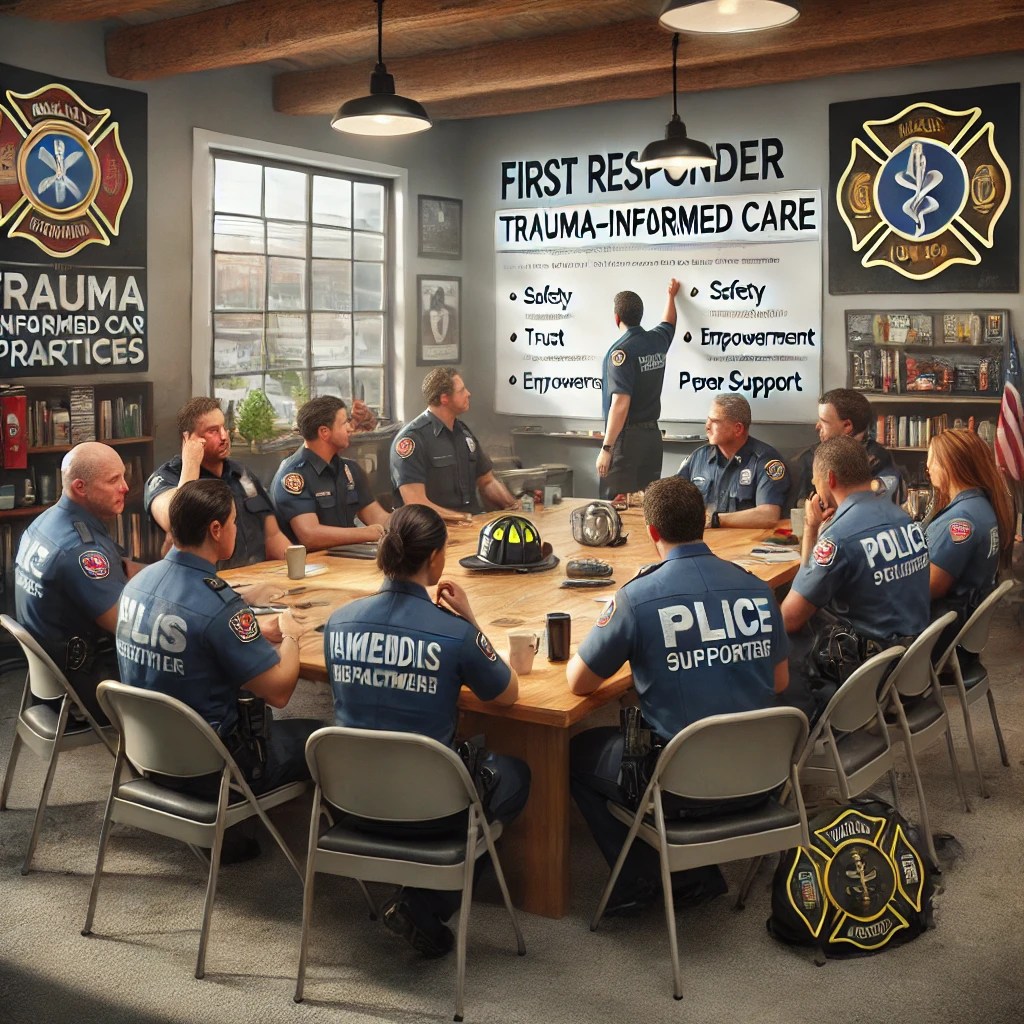
    Key Principles of Trauma-Informed Practices for First Responder Departments

    1. Safety
    First responders need to feel safe—physically and emotionally—at work. This means creating an environment where we are not only protected from physical harm but also supported emotionally. Policies should emphasize the importance of creating a safe space for conversations about mental health, and leadership should lead by example, modeling openness and vulnerability.

    2. Trustworthiness and Transparency
    Building trust is fundamental in a trauma-informed environment. First responders must know that we can rely on our peers and supervisors to have our best interests in mind. Be transparent about the availability of mental health resources, policies, and the steps taken to ensure confidentiality.

    3. Peer Support
    Peer support is a critical component of trauma-informed practices in first responder departments, especially in rural communities. In these areas, peer support often serves as the first line of defense against mental health crises. Connect fellow first responders to a network of trained peer supporters who can offer emotional support, provide a listening ear, and guide their colleagues to resources when necessary. Peer supporters should receive training in trauma-informed communication and active listening skills.

    For information on how to become a peer support specialist in the state of Maine, visit: https://www.maine.gov/dhhs/obh/training-certification/intentional-peer-support

    4. Empowerment
    Empower first responders to take charge of our own mental health and well-being. This involves providing us with the tools and knowledge to recognize the signs of trauma and burnout in themselves and others. Encouraging self-care, promoting stress reduction techniques, and creating policies that allow for time off and mental health days are essential.

    5. Collaboration
    Collaboration between departments and mental health professionals is crucial. For rural areas like Maine, departments should work together to develop partnerships with telehealth services or reach out to organizations that specialize in trauma-informed care. Encouraging collaboration ensures that first responders have access to resources that they might not otherwise have due to geographic limitations.

    Steps for Implementing Trauma-Informed Practices

    1. Leadership Training and Buy-In
    For trauma-informed practices to be successfully integrated into the culture of a department, leadership must be on board. Train leaders at all levels to understand the principles of trauma-informed care, how trauma manifests, and the long-term impact it can have on first responders. Leaders should promote mental health resources and encourage open communication about emotional well-being.

    2. Create Trauma-Informed Policies
    Departments should establish policies that support the well-being of their personnel. These policies should include clear protocols for seeking help, taking mental health days, and addressing the long-term needs of first responders who may be struggling. Policies should also ensure that mental health resources are accessible and that there is no penalty for seeking help.

    3. Establish Peer Support Programs
    As mentioned, peer support is especially important in rural areas where access to professionals may be limited. First responder departments should establish formal peer support programs, providing training for peers on how to offer support, recognize warning signs of trauma, and connect individuals to further resources if needed.

    4. Provide Ongoing Education and Training
    Ongoing training in trauma-informed care should be incorporated into professional development opportunities. This training should cover not only how to support colleagues but also self-care techniques and how to identify when you may need to seek professional help.

    5. Normalize Mental Health Conversations
    Departments should create a culture where it’s normal to talk about mental health. This can be done through open forums, regular check-ins, or informal gatherings where first responders can share their experiences without fear of judgment or stigma. By normalizing these conversations, departments can begin to break down the barriers to seeking help.

    6. Develop a Clear Referral Process
    For first responders who need more professional help, it’s important to have a clear and easily accessible referral process. In rural areas, this might mean connecting with telehealth services or local mental health providers who can offer remote consultations. Make sure that all first responders know how to access these services and feel confident in doing so.

    Online Therapy Resources Covered by EAP Programs and Insurance

    In rural areas like Maine, where access to in-person mental health services can be limited, online therapy resources are becoming increasingly essential. Many departments are turning to Employee Assistance Programs (EAPs) to help support their staff, and online platforms are often a key component of these services. Additionally, insurance plans are evolving to cover virtual mental health services, making therapy more accessible for first responders. Below is an overview of both EAP and insurance-covered virtual therapy resources that can be utilized by first responders.

    1. Employee Assistance Programs (EAP)

    Employee Assistance Programs (EAPs) are employer-sponsored services designed to support employees’ mental health and well-being. Many EAPs include access to confidential counseling, mental health resources, and referrals to other services. For first responders, especially those working in rural areas, the inclusion of online therapy through EAPs can be a vital resource.

    Key Benefits of EAP for First Responders:

    • Confidentiality: EAP services are typically confidential, ensuring that employees can seek help without fear of affecting their job or reputation.
    • Access to Online Therapy: Many EAP programs offer telehealth services, including video or phone therapy, making it easier for first responders to access mental health support without traveling to a provider’s office.
    • Short-Term Counseling: EAPs often provide a limited number of free counseling sessions (typically 3–6 sessions), which can be beneficial for first responders who are seeking immediate, short-term support or assistance with crisis situations.
    • 24/7 Availability: Some EAP programs offer 24/7 support, which is crucial for first responders who work irregular hours and may need immediate assistance at any time.

    Examples of Online Therapy Resources Through EAP Programs:

    • Talkspace: A digital platform offering online therapy through text, video, and audio messages. Some EAPs partner with Talkspace to provide first responders with access to licensed therapists at no cost.
    • LifeWorks: A global EAP provider that offers mental health support, including virtual counseling services, to employees and their families.

    2. Virtual Therapy Covered by Insurance

    Many insurance plans, including Medicaid, Medicare, and private insurance, are now covering online therapy services. This has made it easier for first responders to access care from the comfort of their own homes, especially in rural areas where local mental health providers may be scarce. It is important to verify with the insurance provider to understand the specific coverage details, but virtual therapy can be an excellent option for first responders who may face logistical barriers to in-person therapy.

    Key Benefits of Virtual Therapy Covered by Insurance:

    • Increased Accessibility: Virtual therapy eliminates the need for travel, which can be especially challenging for first responders working long hours in rural communities.
    • Variety of Therapy Options: Insurance-covered virtual therapy options can include individual counseling, group therapy, trauma-informed therapy, and even family therapy, allowing first responders to address a wide range of needs.
    • Convenience: Virtual therapy often offers more flexible hours, making it easier to schedule appointments around a first responder’s unpredictable work schedule.

    Examples of Insurance-Covered Virtual Therapy Platforms:

    • BetterHelp: This platform connects individuals with licensed therapists via text, video, or phone calls. BetterHelp works with a variety of insurance providers and is often included in EAP programs.
    • Amwell: An online health service that offers therapy and counseling services. Amwell is covered by many insurance plans and provides a network of licensed therapists who can provide mental health care remotely.
    • Teladoc Health: A well-known telehealth provider that offers mental health services, including virtual therapy. Many insurance companies include Teladoc services as part of their mental health benefits, making it an accessible option for first responders.
    • MDLive: Another telehealth provider that offers virtual therapy and psychiatry services. MDLive is frequently covered by insurance plans, providing affordable mental health services for first responders in rural areas.

    How Departments Can Support Access to Online Therapy

    1. Include Virtual Therapy in the EAP Offerings: Departments can work with their EAP providers to ensure that online therapy is part of the service package. This can help ensure that first responders have immediate access to the mental health support they need, no matter where they are located.
    2. Inform First Responders About Available Resources: Departments should educate their staff about the availability of virtual therapy through both their EAP and insurance coverage. Clear communication about how to access these services and what is covered will help reduce barriers to seeking care.
    3. Encourage Utilization of Virtual Resources: Stigma surrounding mental health is still present in many first responder communities, especially in rural areas. Encouraging the use of online therapy can help normalize seeking help and reduce the fear of judgment. Departments can promote virtual therapy as a convenient and effective option for addressing mental health concerns.
    4. Provide Guidance for Insurance Coverage: It is important for departments to assist first responders in understanding their insurance benefits related to virtual therapy. This can include sharing resources or hosting information sessions where insurance representatives explain how virtual care is covered and how to access it.

    In rural communities like Maine, where mental health services may be limited, online therapy is an invaluable resource for first responders. Whether through EAP programs or insurance coverage, these virtual platforms make mental health support more accessible and convenient. By educating departments about these resources and encouraging their utilization, we can help ensure that first responders have the tools we need to take care of our mental health, even in areas where traditional services may be difficult to access.

    With the integration of these resources, departments can build a more supportive environment for their staff, encouraging a culture of well-being and resilience in the face of the unique challenges that come with the first responder profession.

    Conclusion: Building a Culture of Support

    Implementing trauma-informed practices is not just about creating policies; it’s about fostering a culture that recognizes and values the emotional well-being of first responders. In Maine’s rural communities, where mental health services may be scarce, it is especially important to take proactive steps in supporting first responders and offering peer support systems that can bridge the gap.

    By prioritizing safety, trust, peer support, empowerment, and collaboration, departments can create environments where first responders can thrive. This will not only improve the mental health of individual first responders but will also enhance the overall effectiveness and cohesion of the team. Trauma-informed practices are essential to ensuring that those who serve and protect our communities are well-supported and equipped to face the challenges of their job—both physically and mentally.

    By taking these steps, we can work together to ensure that first responders have the support we need to do our jobs effectively and with resilience, even in the face of the most challenging circumstances.