Tag: health

  • From Darkness to Purpose: How I Found My Calling Through Sobriety

    From Darkness to Purpose: How I Found My Calling Through Sobriety

    I still remember the sound of the bottle opening—the sharp hiss of pressure released. It was my signal to exhale, to let go of the stress, to numb the fears I couldn’t face. It began innocently enough, a glass of wine here, a drink there, just to take the edge off after a long day. I was juggling so much at the time: graduate school, single motherhood, and a leadership role at the University of Maine, managing nearly 60 senators representing every graduate program. The weight of it all was enormous, but I was proud of how well I seemed to handle it—at least on the surface.

    Then came 2020.

    The Covid pandemic didn’t just disrupt the world around me; it unraveled the fragile thread holding me together. As a leader during such an uncertain time, I felt a responsibility to remain calm and composed. But inside, I was breaking apart. To cope, I began drinking more—just enough to calm my nerves. It felt harmless at first, even justified. After all, wasn’t everyone finding their own ways to deal with the stress?

    What I didn’t realize was how quickly alcohol had taken hold of my life. What started as an occasional escape became my crutch. Then, seemingly overnight, it became my master. I couldn’t sleep without it. I couldn’t wake up without it. The shakes, the headaches, the constant anxiety—it all demanded I drink just to function. And yet, I was still showing up, still leading, still pretending everything was fine.

    But it wasn’t fine.

    My dependence on alcohol grew in the shadows, invisible to those around me. I was isolated in leadership, feeling like I had no one I could turn to for support. So I turned to the bottle instead. Alcohol became my confidant, my escape, and my prison.

    In just a few months, my life crumbled.

    The responsibilities I had once carried with pride became unbearable. My credibility eroded as the people around me began to see the cracks in the façade. I lost opportunities I had worked so hard to earn. I lost the respect of others, but worse, I lost respect for myself.

    At my lowest point, I found myself sleeping in my car. I had gone from a self-supporting single mom in graduate school and leadership to a homeless woman with nothing but a pile of shattered dreams. My rock bottom wasn’t just a moment; it was a freefall into despair.

    But here’s the thing about rock bottom—it’s also a foundation.

    My recovery started with small, painful steps. Admitting I needed help. Reaching out to people I thought I had alienated forever. Facing the shame and guilt I had drowned for so long. I had to rebuild my life piece by piece, brick by brick, with nothing but the will to survive and a faint hope that maybe—just maybe—I could do better.

    In sobriety, I began to discover not just who I was, but who I was meant to be. My life had been saved—many times, in many ways—by the hands of first responders and healthcare workers. Their compassion and courage became a beacon for me, lighting the way forward. I decided I wanted to give back to the very field that had saved me.

    I became an EMT, then a firefighter, and later found my place in healthcare, working in an emergency department. For the first time, I felt like I was part of something greater than myself. I had found my calling—a purpose that made my pain feel meaningful.

    This work doesn’t just encourage my sobriety; it demands it. I could not perform this job effectively if I weren’t committed to maintaining my recovery. The same tools I once ignored or dismissed—self-awareness, stress management, healthy coping strategies—are now essential to my success. Every shift is a reminder of how far I’ve come and why I must keep moving forward.

    I’ve replaced the bottle with better tools: mindfulness, connection, and a deep commitment to serving others. Instead of running from my emotions, I’ve learned to process them, to face the hard days head-on, and to find strength in vulnerability.

    The irony isn’t lost on me that the career I once feared would judge me for my past has become my greatest ally in staying sober. In helping others, I’ve also helped myself.

    Today, I am not just sober—I am alive, awake, and thriving. I am proud of the person I’ve become, but I never forget the woman I was. She’s the reason I fight so hard to stay on this path.

    If you’re reading this and struggling, I want you to know it’s never too late to rewrite your story. Recovery is possible. A life of purpose and joy is waiting for you on the other side.

    Because sometimes, the worst chapters of our lives are the ones that teach us how to write our best.

  • Adapting to 12-Hour Night Shifts: Maintaining Health, Focus, and Well-Being

    Adapting to 12-Hour Night Shifts: Maintaining Health, Focus, and Well-Being

    As a first responder and healthcare professional working long and irregular hours, adapting to a 12-hour night shift schedule since working in the hospital has been a journey. Not only do I need to manage the physical demands of my work, but I also need to maintain my mental health and overall well-being. The stress of working night shifts, along with the strain on my sleep schedule, can be overwhelming. Over time, I’ve developed strategies that have helped me stay healthy and alert, both during my shifts and in the time between. This post will walk you through the practical changes I’ve made to stay on top of my health, including my approach to sleep hygiene, mental health medication, and adapting my routines to ensure I’m getting the rest I need.

    1. Mastering Sleep Hygiene for Night Shifts

    Working night shifts means adjusting your body’s natural circadian rhythm, which is the internal biological clock that regulates your sleep-wake cycle. This can be tough, especially if you’re used to being awake during the day. The key to making it work lies in creating strong sleep hygiene practices that ensure you get quality rest, even during the day when the world around you is awake.

    To ensure good sleep hygiene, I’ve taken the following steps:

    • Create a dark, quiet, and cool environment: I use blackout curtains and earplugs to block out light and noise, as these can disrupt my ability to fall asleep during the day.
    • Limit screen time: The blue light from screens can mess with the production of melatonin, the hormone that helps you sleep. I avoid screens for at least an hour before sleep.
    • Keep a consistent sleep schedule: Even though I’m working different hours, I try to stick to a regular routine. This helps my body adjust and keeps my circadian rhythm as balanced as possible.

    By sticking to these sleep practices, I’ve been able to get solid, restorative sleep, even with a rotating night shift schedule.

    2. Adjusting My Medication Schedule for Effectiveness

    For someone who has struggled with mental health in the past, finding the right medication regimen is crucial. Since working night shifts, I’ve had to make adjustments to my medication schedule to ensure they are working effectively when I’m awake and alert.

    I take certainmedications in the evening, right before I start my shift, such as my anti-psychotic, and my non-amphetamine stimulants, ensuring they’re active during the night. I take my mood stabilizer, vitamins, and LifeVantage supplements at the same time in the morning every day, regardless of whether I’m working. This helps keep me balanced and focused throughout my shift while still getting the proper amount of rest when it’s time for sleep.

    When I’m not working, I’ll typically skip my stimulants for the first day that I’m off, so that I don’t take a double-dose within a 24-hour period. This also allows my body to reset to being awake during the day and asleep at night since I tend to group my shifts together so that I spend about half the week on nightshift schedule, and the other half on a regular schedule. When I’m preparing to start my nightshift schedule again, I’ll typically stay up late the night before my shift, skip my stimulants in the morning, stay wake for a few hours in the morning, and then sleep during the day. I’ll then start my nightshift routines and regimen again.

    Disclaimer- Work with a psychiatrist on altering and adapting your mental health medication regimen. Do not make changes independently. These licensed professionals can guide you on the best regimen to fit your schedule.

    3. Bidding Farewell to Energy Drinks: A Game-Changer

    Energy drinks had once been a major part of my night shift routine. I was consuming 3-4 Celsius or Monster drinks per shift to stay awake and alert. At first, they seemed to give me the energy boost I needed, but soon I realized they were wreaking havoc on my body.

    The sugar and caffeine spikes from energy drinks led to erratic energy levels, making me crash several times during, and after my shift. I also noticed that I had intense sugar cravings, and my mood would dip after the energy high wore off. These highs and lows affected my concentration, mood, and overall sense of well-being.

    That’s when I got introduced to AXIO by LifeVantage. AXIO provides a clean, sustained energy boost without the crash. It’s not only helped me stay alert throughout my shift, but I’ve also noticed a significant decrease in sugar cravings, better mental clarity, and even weight loss. This switch has been a game-changer, and I now feel much more in control of my energy levels.

    4. Managing Stress Hormones and Oxidative Stress with Protandim

    Night shifts can affect more than just your sleep cycle—they can significantly alter your hormone and neurochemical pathways, contributing to chronic stress. Working at night increases cortisol levels (the body’s primary stress hormone) and disrupts the natural balance of other hormones that regulate mood, appetite, and sleep.

    The body’s response to night shifts causes an increase in oxidative stress—when free radicals overwhelm the body’s ability to neutralize them, leading to damage in cells, tissues, and organs. With regular, restorative sleep, these free radicals get flushed out by the body, but when having sleep disruptions or changes in sleep pattern due to night shifts, this does not happen as effectively. Over time and with age, we tend to hold on to more and more free radicals in our bodies, this can contribute to various health problems, including burnout, chronic fatigue, and even cardiovascular issues.

    I’ve found that Protandim by LifeVantage has been instrumental in helping me manage stress hormones and oxidative stress. Protandim is an antioxidant supplement that helps the body combat oxidative stress, reduce inflammation, and support overall health. Since I’ve started using it, I’ve noticed a significant reduction in my feelings of being “on-edge” all the time, and I feel more balanced in my mental and emotional health. This has been crucial in helping me manage the stress of my job and the irregular hours that come with it.

    5. Power Naps: The Secret to Staying Alert

    Sometimes, a full night’s sleep isn’t always possible, especially when working long shifts. That’s why I’ve found that taking a short, strategic nap during my shift can work wonders for my alertness and energy levels. Even just a 15-20 minute nap can be incredibly refreshing.

    During my lunch break or downtime, I’ll take a quick nap in my car or a quiet area at the hospital. This short rest gives me a boost of energy, reduces fatigue, and helps me stay sharp for the second half of my shift. You’d be surprised what even a brief nap can do for your focus and clarity- just make sure you remember to set an alarm!

    I will also take short naps during the days when I’m off and adapting to being awake during the day, and asleep at night. Because of the higher demands on our bodies from a challenging schedule and the work we do, it is natural to feel more tired regardless of how regimented we are. Allowing the space for my body to feel fatigued, is essential. Listening to my body’s needs and allowing for moments of rest when I need them is key to my well-being.

    6. Creating Morning and Night Routines

    Another key factor in adapting to night shifts is maintaining a routine when you wake up, regardless of the time. For me, brewing a pot of fresh coffee or engaging in a calming ritual helps signal to my body that it’s time to wake up. I try to incorporate some form of self-care into my morning and evening routine, such as stretching, to get my body moving before I start my day (or night).

    After work, I have a winding-down routine that helps me relax and prepare for sleep. This includes avoiding intense physical activity right before bed and engaging in calming activities like reading or light stretching.

    7. Adjusting My Appointment Schedule

    I’ve found it helpful to schedule my medical appointments and personal tasks around my sleep schedule. I try to book my appointments for midday, regardless of whether I’m working, allowing me to sleep in the morning after my shift and before I need to wake up for the next one. This ensures that I’m getting adequate rest and that my body is prepared for the demands of the next shift.

    8. Understanding the Neurochemical and Hormonal Effects of Night Shifts

    Night shifts don’t just affect sleep—they also alter the neurochemical and hormonal pathways in our body. When we work at night, it disrupts the secretion of melatonin, the hormone that regulates sleep, and increases the production of cortisol, the stress hormone. This is why night shift workers often feel more stressed and have a harder time adjusting to irregular hours.

    Additionally, night shifts can impact neurotransmitters like serotonin, which regulates mood and sleep. Disruptions in serotonin levels can lead to feelings of irritability, anxiety, and depression. Over time, these disruptions can result in chronic health problems.

    Fortunately, there are ways to mitigate these effects. Ensuring quality sleep hygiene, using stress-reducing supplements like Protandim, and staying active during your waking hours can all help keep your body’s neurochemical and hormonal levels in check.

    Final Thoughts: Prioritizing Your Health

    Adapting to a 12-hour night shift schedule is no easy task, but with the right strategies, it’s possible to stay healthy, alert, and balanced. The key lies in listening to your body and finding routines that work for you, from improving sleep hygiene to managing stress through medications, supplements and naps.

    By taking these steps, I’ve noticed a significant change in how my body handles the stress of night shifts. If you’re a healthcare worker or first responder, I encourage you to take control of your health and make these small but effective changes. Your well-being is worth it.

    A final note- DRINK MORE WATER! Drinking more water may seem simple, but it’s an essential part of staying healthy and energized during long, demanding shifts.

  • The Holidays Through the Eyes of a First Responder: A Different Kind of Celebration

    The Holidays Through the Eyes of a First Responder: A Different Kind of Celebration

    For many, the holidays are a time to gather with family, exchange gifts, and celebrate traditions. But for those of us in the first responder and healthcare community, the meaning of the holidays can look quite different. We don’t always get the luxury of celebrating with our loved ones, and the sights, smells, and memories that come with these special days can often be mixed with the stress, trauma, and demands of our jobs.

    As a first responder, the holidays are a reminder that, while others are cozying up at home with family, we might be in the middle of a shift, answering calls, or working in a hospital, doing our part to care for those in need. Some of us don’t get to experience the holiday cheer when we’re on duty, and for many, this can make the holidays feel intrinsically different from how they may seem to those outside the profession.

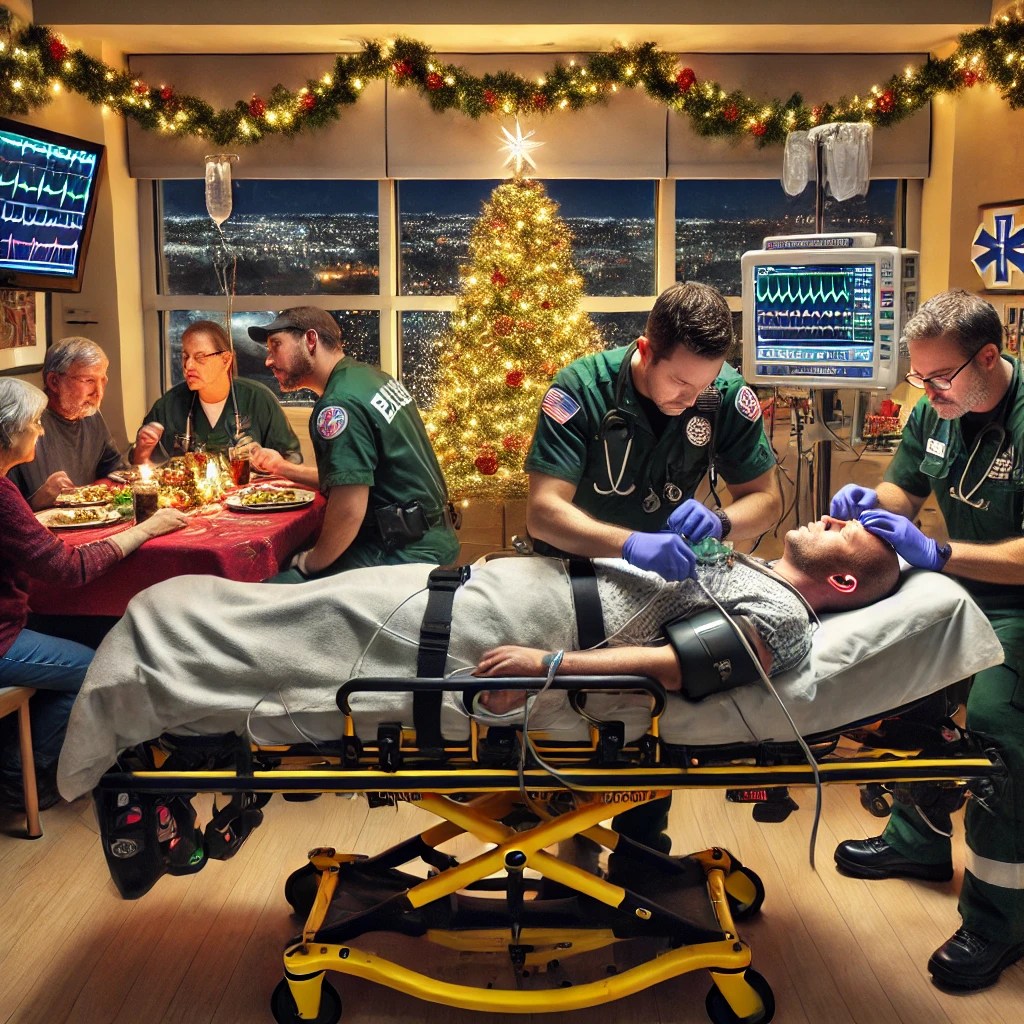
    For example, I’ll never forget the Thanksgiving I worked as an EMT. I responded to a cardiac arrest call that occurred during Thanksgiving dinner. The scene I arrived at was one I’ll never forget: the elderly man’s family was in the middle of a festive meal when he collapsed. Despite our best efforts, he never woke up. As we worked on him, the smell of food lingered in the air—the aroma of mashed potatoes, stuffing, and turkey mixing with the unsettling smell of death. That scent of mashed potatoes stayed with me for a long time after that call, so much so that even the thought of it made me feel nauseous for a while. The experience, unfortunately, became a dark memory associated with what’s supposed to be a joyful day.

    For many of us in the first responder field, this is a reality: we carry the weight of difficult calls and tragic scenes that happen on what should be a celebratory occasion. It’s not uncommon for our work to leave us with heavy memories tied to a holiday, affecting how we approach it in the future.

    What happens when we’re unable to be with our families on the exact day of the holiday? Often, we have to find new ways to celebrate. We shift our celebrations to the days before or after the actual holiday. Our families learn to adapt, making adjustments to their schedules so that we can still come together and create new traditions. It’s not the same as being there in the moment, but it’s the next best thing. This sense of flexibility, and the ability to adjust holiday norms, often becomes an unspoken part of our lives.

    And then there’s the camaraderie we share with our colleagues. Since many of us end up working together during the holidays, we form bonds with the very people we spend most of our time with. Celebrating with colleagues might not feel the same as being with family, but it offers a unique kind of connection. We support each other through the stress of being away from home, and in those moments, we share in the holiday spirit, together. It’s a different kind of celebration—a celebration of resilience, teamwork, and the bonds formed through shared experience.

    This shared sense of unity is what can make the workplace healthier and more positive during the holidays. We know what it’s like to miss out on time with loved ones, so we step up for each other. Sometimes we collaborate on potluck dinners, or plan “secret Santa” and gift exchanges. We look out for one another, offer words of encouragement, and, in a way, create our own family within our team. This is what helps us get through those long shifts and difficult calls while still keeping the holiday spirit alive.

    However, the holidays do come with their own set of challenges. While we’re out there working, we also need to be mindful of the potential risks and accidents that can arise during this festive season. Some common accidents include car crashes from winter weather, fires due to holiday lights or cooking accidents, burns from handling hot food or drinks, and slips and falls from icy sidewalks. As we know all too well, accidents don’t take a holiday, and the stress of dealing with injuries during such a time can add to the emotional weight we carry.

    Here are some helpful tips for first responders and healthcare workers to make the most of the holiday season, even when you’re on the job:

    1. Create New Traditions – The holidays don’t have to be celebrated on the exact day. Adjust your traditions by celebrating before or after your shift. This can help you feel connected to the season, even if you’re working.
    2. Take Small Breaks – If you’re working long hours, carve out brief moments for yourself. A quick walk outside to look at holiday lights, a cup of hot cocoa, or even a few minutes of deep breathing can help you recharge and stay grounded.
    3. Lean on Your Team – The holidays can be tough when you’re away from family, but your colleagues are your second family. Take time to share a laugh, celebrate together, and make the best of the situation. These moments help create a bond that will last beyond the shift.
    4. Find Meaning in Your Work – During the busy holiday season, remind yourself why you do this job. The work you do has a meaningful impact on others, and knowing you’re making a difference can help you feel fulfilled, even if you’re away from home.
    5. Stay Connected Virtually – If you can’t be with your loved ones, take advantage of video calls or texts to stay in touch. Even a quick check-in can help you feel connected and supported.
    6. Practice Self-Care – After a tough call or shift, take time for yourself to decompress. Whether it’s exercising, journaling, or just unwinding with a good book or holiday movie, taking care of your mental health is key to staying balanced during the holidays.
    7. Give Yourself Grace – The holidays may not look like what you imagined, and that’s okay. Be kind to yourself, and recognize that you’re doing your best in a challenging profession. Acknowledge your feelings and give yourself the space to experience them.
    8. Enjoy the Small Moments – Whether it’s the festive decorations in the break room or the smell of holiday treats during a call, appreciate the little moments that bring holiday cheer. These tiny sparks of joy can make a big difference in brightening your day.
    9. Remember You’re Not Alone – Many people in healthcare and first responder roles feel the same way during the holidays. Reach out to your colleagues for support, and remember that we’re all in this together. You’re part of a larger community that understands and appreciates your sacrifices.

    By taking a proactive approach, you can still find ways to make the holidays meaningful—even when you’re working.

    With that in mind, I want to wish everyone a safe and healthy holiday season. Whether you’re working on the frontlines, spending time with family, or creating new traditions, take a moment to appreciate the bonds you share with others. And remember, you’re not alone—whether it’s with your coworkers or the broader first responder community, we’re all in this together.

    Stay safe, stay connected, and let’s continue to support each other during this holiday season and beyond.

  • Finding Peace in the Wild: How Nature Became My Mental Health Sanctuary

    Finding Peace in the Wild: How Nature Became My Mental Health Sanctuary

    As first responders, we often find ourselves living in the fast lane, constantly on alert, managing crises, and navigating high-pressure situations that demand our focus, skill, and resilience. In the midst of this chaotic work life, I have found that one of the most essential tools in managing stress and maintaining my mental health has been connecting with nature.

    My journey to finding peace in the wild didn’t happen overnight, but as I’ve experienced the therapeutic power of the natural world, it has become an integral part of my self-care routine—something I actively seek out for restoration, clarity, and healing. Whether it’s a short walk along a river or an extended camping trip in the woods, these moments in nature have become my sanctuary, offering a sense of grounding that helps me process the emotional toll of my EMS career.

    Outdoor Experiences That Provide Peace and Clarity

    One of the most accessible places for me when time is short is the Androscoggin Riverwalk, in Lewiston-Auburn, and the Bragdon Hill Conservation area in Poland, ME. I’ve found that even a brief walk along the riverbanks or forest offers a mental reset, allowing me to pause and absorb the sights and sounds of the flowing water and wildlife. There’s something calming about the rhythm of the river, or a narrow trail, and it provides me with the space to let go of the stresses of the day.

    When I have more time, I often head to Mount Apatite or Streaked Mountain for a quick hike. The physical activity combined with the natural beauty of the forest helps to clear my mind and refresh my body. Hiking is a great way to disconnect from the noise of everyday life and connect with something much bigger than myself.

    For days when I need a longer getaway, I take a drive to the ocean, where the salty air and waves crashing against the rocks create the perfect environment for reflection. Fort Williams Park, in particular, is a favorite destination of mine. The trails are scenic and lead me to a rocky beach where I can listen to the waves tumbling over the stones. The sound is unlike anything else—it’s soothing, like nature’s own meditation.

    Screw Auger Falls in Newry, Maine, and the areas around the University of Southern Maine in Portland are other spots that I treasure, especially when I want to explore new places for creative inspiration, such as finding seaglass. These small treasures serve as a reminder that, even in the chaos of life, beauty can be found in the simplest moments.

    Technology-Free Camping for Deep Restoration

    When I’m able to get away for a longer stretch of time, there’s nothing more restorative than technology-free camping in the areas surrounding Rangeley, Maine. With no cell service, I am fully immersed in the natural world—no distractions, no screens. It’s just me, the sounds of the forest, and the peaceful serenity of being completely present.

    Some of my favorite activities during these camping trips include campfire meditations, kayak fishing, and paddleboarding. There’s something about being on the water, surrounded by quiet, that allows me to truly connect with myself. Whether I’m sitting quietly by a lake, a trickling stream, or gazing out at the ocean, these moments allow me to reflect and breathe deeply.

    Using Nature for Meditation

    Nature has become key to my meditation practice. The external sounds of the forest, the river, or the ocean provide a natural backdrop that helps me center my thoughts and focus. I use the sounds of birds chirping, water flowing, or waves crashing to quiet my mind and ground myself in the present. These moments of stillness in nature give me the mental space to process the trauma and stress of my job, while also reminding me of the peace that exists outside of the chaos.

    When I can’t physically be in nature, I’ve found solace in guided meditations with nature sounds or handpan music. Some of my favorite guided meditations can be found on YouTube, and I highly recommend them for anyone seeking a moment of calm. Here are a few of my go-to meditations:

    Tips for First Responders: Using Nature as a Healing Space

    If you’re a first responder like me, nature can be one of the most powerful tools for managing stress and enhancing mental health. Here are a few tips on how to incorporate nature into your healing routine:

    1. Start Small: If you’re pressed for time, a short walk in a local park or along a riverbank can offer a quick mental reset. Even five minutes can help clear your mind and alleviate stress.
    2. Make It a Habit: Schedule regular outings to nature, whether it’s a weekly hike, a monthly camping trip, or even a daily walk. Consistency helps train your mind to relax and find peace in nature’s rhythms.
    3. Embrace Technology-Free Time: Turn off your phone and leave your digital devices behind. Technology-free moments in nature help you focus on the present and disconnect from external pressures.
    4. Practice Nature-Based Meditation: Use the sounds of nature to guide your meditation practice. If you can’t get outside, seek out guided meditations that feature natural sounds like water flowing, wind blowing, or birds chirping.
    5. Engage in Outdoor Activities: Whether it’s hiking, kayaking, or simply sitting quietly by a stream, engaging in outdoor activities can provide both physical and mental restoration. Find what brings you peace and make time for it.

    Nature has become a sanctuary for me—a space where I can breathe, reflect, and find clarity. It offers a moment of respite from the chaos of my EMS career and provides the mental and emotional restoration I need to continue my work. As first responders, we give so much of ourselves to others, but we must also prioritize our own well-being. Nature has taught me that healing is possible when we take time to reconnect with the world around us, and I hope it can offer the same sense of peace and restoration to you.

  • The Healing Power of Being Vulnerable

    The Healing Power of Being Vulnerable

    As first responders, we are often taught to be strong and unwavering in the face of chaos. We are trained to handle the worst moments in people’s lives, keeping our composure when the pressure is on. While this strength is vital in our line of work, it can sometimes lead us to neglect a powerful tool for healing: vulnerability.

    For many of us in high-stress professions like EMS, it’s easy to think that showing vulnerability is a sign of weakness. We may fear that revealing our struggles or sharing our emotions might jeopardize our professional reputation or the trust others place in us. But here’s the truth: vulnerability is not a weakness; it is a profound strength that allows for growth, connection, and healing.

    The Strength in Vulnerability

    Vulnerability doesn’t mean being weak or incapable—it’s about being open and honest with ourselves and others about our challenges. It means acknowledging that we are human and that we face emotional, physical, and mental struggles, even in a job that requires us to be “on” all the time.

    I’ve had my own experiences with vulnerability. In my journey, I’ve learned that the moments when I have been open about my own mental health struggles, my fears, and my insecurities are the moments when I’ve experienced the most growth. It’s when I allowed myself to be vulnerable—whether by talking to a trusted colleague, a mentor, or even writing down my thoughts on my blog—that healing began to take place.

    Unfortunately, not everyone in this field is encouraged to embrace vulnerability. I’ve witnessed many colleagues shrug off their experiences, adopting the mindset that showing any sign of weakness is unacceptable. Too often, people turn to substances like alcohol to numb their emotions instead of opening up to others. The pressure to “tough it out” can create a toxic environment where the mentality becomes, “If you can’t stand the heat, stay out of the field.”

    This environment not only inhibits personal growth but also perpetuates a cycle of isolation and self-destruction. When vulnerability is seen as a weakness, it becomes harder for people to reach out for help when they need it the most. I’ve seen this firsthand—the silent struggles that so many face because they fear being judged or misunderstood.

    Healing Through Connection

    One of the most powerful aspects of vulnerability is how it fosters connection. When we allow ourselves to be vulnerable, we invite others to do the same. This mutual openness can be transformative.

    Throughout my career, I’ve been fortunate to find trusted peers and mentors who are always there for me when I need them. These are the people who have shown me that there is strength in vulnerability, and that we don’t have to carry our burdens alone. I know that when I pick up the phone to call, they’ll be on the other end of the line, ready to listen and offer support.

    Surprisingly, many people are more open to talking through our struggles, and sharing their own experiences than we might think. The truth is, people would rather drive many miles, talk for hours, and offer their support than have to attend your funeral. This kind of connection is not only meaningful—it’s lifesaving.

    In my journey, I’ve learned that the power of a simple conversation cannot be underestimated. Sometimes, all it takes is someone else’s willingness to listen and share their own experiences to make us feel seen and understood. We heal when we come together, when we recognize that we are part of a larger family, and that our struggles are shared.

    Embracing Vulnerability to Build Resilience

    I’ve learned that resilience isn’t about pushing through in silence or pretending everything is fine when it’s not. True resilience is rooted in vulnerability—the ability to admit when we’re struggling and to seek the support we need. It’s about understanding that strength comes not from being invulnerable, but from facing our difficulties head-on and allowing ourselves to be supported by others.

    By embracing vulnerability, we can begin to unravel the layers of stress and trauma that come with our work. We can break free from the mindset that we have to handle everything alone and start recognizing that seeking help, sharing our emotions, and expressing our struggles makes us stronger, not weaker. When we embrace vulnerability, we not only improve our mental health but also deepen our connection with our colleagues and loved ones.

    Encouraging Others to Be Vulnerable

    If you’re reading this and finding it hard to imagine being open about your struggles, know that you’re not alone. It’s okay to take the first step toward vulnerability. You don’t have to do it all at once, but start with small moments of openness. Share your thoughts with a colleague you trust, talk to a therapist, or simply give yourself permission to feel without judgment.

    Remember, being vulnerable is not a sign of weakness. It’s an act of courage. By allowing ourselves to be seen, to share our emotions, and to seek support, we pave the way for healing and growth—not just for ourselves but for the entire first responder community.

    We are in this together. And together, we will heal.

  • Wellness Apps for Healthcare Professionals and First Responders: Managing Tasks, Mental Health, Mindfulness, and Fitness

    Wellness Apps for Healthcare Professionals and First Responders: Managing Tasks, Mental Health, Mindfulness, and Fitness

    As a healthcare professional or first responder, your work can be incredibly rewarding but also mentally and physically demanding. Balancing the intense nature of the job with self-care is crucial to maintaining your overall well-being. Fortunately, there are a number of wellness apps that can help you manage daily tasks, reduce stress, improve your mental health, and stay fit. Here are some helpful apps designed with your needs in mind:

    1. Headspace – Mindfulness and Meditation

    Description:
    Headspace is a popular mindfulness and meditation app that helps users reduce stress and anxiety, improve focus, and enhance overall mental well-being. With guided meditation sessions ranging from a few minutes to longer practices, this app is perfect for decompressing after a high-pressure shift or starting your day with a calm mindset.

    How It Can Be Used:
    Headspace offers specific programs for stress, sleep, focus, and even “Quick Stress Relief” sessions for those moments when you need a break during your shift. The app also includes mindfulness tools like breathing exercises and body scans to help you relax and reset.

    Pricing:

    • Free with limited features
    • Subscription plans start at $12.99/month or $69.99/year

    2. MyFitnessPal – Fitness and Nutrition Tracking

    Description:
    MyFitnessPal is a fitness and nutrition tracking app that helps you track calories, exercise, and set fitness goals. It’s especially useful for healthcare professionals and first responders who are on the go but want to maintain a healthy lifestyle despite irregular schedules.

    How It Can Be Used:
    MyFitnessPal allows you to log meals, workouts, and even water intake, helping you stay on track with nutrition and fitness goals. You can set personalized fitness goals and get insights into your progress over time, helping you stay motivated even on the busiest days.

    Pricing:

    • Free with limited features
    • Premium subscription starts at $19.99/month or $79.99/year

    3. RescueTime – Task Management and Focus

    Description:
    RescueTime is a time management app that helps you track and manage your daily tasks. It works by tracking how much time you spend on various apps and websites, giving you insights into your productivity. This is helpful for first responders who often have to juggle multiple tasks at once.

    How It Can Be Used:
    You can set goals for how much time you’d like to spend on certain activities, like administrative tasks or self-care. RescueTime will notify you if you’re spending too much time on distractions, helping you stay focused and organized throughout your workday or personal time.

    Pricing:

    • Free with basic features
    • Premium subscription costs $12/month or $78/year

    4. Calm – Sleep, Meditation, and Relaxation

    Description:
    Calm is a meditation and relaxation app designed to reduce stress, improve sleep, and help users manage anxiety. It offers a wide range of soothing sounds, breathing exercises, and sleep stories, all of which are perfect for first responders who need to unwind after a tough shift.

    How It Can Be Used:
    Use Calm to help you fall asleep with sleep stories or wind down after a hectic day with guided breathing or meditation exercises. The app also features calming music and nature sounds, making it a great tool for creating a peaceful environment at home or on the go.

    Pricing:

    • Free with limited content
    • Premium subscription starts at $14.99/month or $69.99/year

    5. Trello – Task and Project Management

    Description:
    Trello is a highly flexible task management app that’s ideal for organizing both personal and professional tasks. It allows you to create boards for different projects, break them down into tasks, and track your progress. For first responders juggling multiple responsibilities, Trello is a useful tool for managing shifts, appointments, and other duties.

    How It Can Be Used:
    Trello allows you to organize your daily responsibilities, set deadlines, and prioritize tasks. You can also collaborate with others by sharing boards, which is especially useful if you work in a team or need to track ongoing projects. Its simple, visual interface makes it easy to use during breaks or on the go.

    Pricing:

    • Free with core features
    • Premium subscription starts at $5/month per user

    6. Breethe – Meditation and Breathing for Stress Relief

    Description:
    Breethe is an app focused on mindfulness, meditation, and stress relief. It’s designed to help you clear your mind and find calm, with guided meditations, sleep stories, breathing exercises, and even specific content for managing stress and burnout.

    How It Can Be Used:
    Breethe offers personalized meditation sessions for beginners to experienced practitioners. It also has short breathing exercises you can do on the go, which is helpful during high-stress situations. The app’s stress management tools can be particularly beneficial for healthcare professionals and first responders looking to stay grounded.

    Pricing:

    • Free with limited features
    • Premium subscription costs $12.99/month or $49.99/year

    7. Sleep Cycle – Sleep Monitoring and Optimization

    Description:
    Sleep Cycle is an intelligent alarm clock and sleep tracking app that analyzes your sleep patterns and wakes you up at the optimal time to feel rested and energized. For first responders, getting quality sleep can be challenging, and Sleep Cycle can help you optimize your rest.

    How It Can Be Used:
    The app tracks your sleep cycles through your phone’s microphone and provides insights into your sleep quality. You can set a “wake-up window,” and Sleep Cycle will gently wake you up when you’re in the lightest phase of sleep, ensuring you feel refreshed even after a restless night.

    Pricing:

    • Free with basic features
    • Premium subscription starts at $29.99/year

    Final Thoughts

    Incorporating wellness apps into your daily routine can help you manage the pressures of working in healthcare or as a first responder. Whether you’re looking to improve mental health, stay fit, or better manage your tasks, these apps provide valuable tools to enhance your well-being. Taking time for yourself isn’t just good for you—it’s essential for maintaining the high level of care and service you provide to others. Start using these apps today and take the first step towards a healthier, more balanced life.

    What apps do you use to maintain your mental health and wellness? Let us know in the comments!

  • Support Systems: How My Recovery and Careers Intersect with Community and Mentorship

    Support Systems: How My Recovery and Careers Intersect with Community and Mentorship

    As I reflect on my journey through recovery and my career as a first responder and healthcare professional, one common thread runs throughout: the importance of a solid support system. My success in both arenas—recovery and my professional life—has been shaped, nurtured, and uplifted by the mentors and community that surround me. From recovery groups to colleagues, friends, and mentors, these relationships have been key to my growth and healing, as well as to my ability to excel in a high-pressure environment where mental health often takes a backseat.

    The Role of Mentorship in Recovery and Career

    Recovery is not a journey taken alone, and neither is a career in first response or healthcare. I have been fortunate to have a group of individuals who have guided me through the rough patches, supported me through the trials, and celebrated my victories—no matter how small they might have seemed.

    One of my most influential mentors is Ron Morin, often referred to as “The Grandfather of EMS in Maine.” Ron has not only shared his invaluable knowledge and experience but has also offered personal guidance, helping me navigate the complexities of the EMS world and the challenges that come with it. His mentorship has extended beyond the technical and professional, touching on the personal aspects of resilience and perseverance in the face of adversity.

    Equally important is my counselor, the clinical director at Recovery Connections of Maine. He has been a constant source of support as I work through the emotional aspects of recovery. His ability to provide a safe, non-judgmental space for me to process my experiences has been crucial in helping me stay grounded and focused on my healing. This safe space has allowed me to dig deeper into the roots of my struggles and has provided me with the tools to continue moving forward.

    I also owe a great deal to my life coach, Jenny Sheriff, who wears many hats as a charge nurse in the Emergency Department and a former paramedic. Jenny has been instrumental in helping me find balance and clarity in my work and personal life. Her perspective, both as a healthcare professional and a person with her own wellness journey, has provided invaluable insight into managing stress, expectations, and self-care. She reminds me of the importance of staying centered amidst the chaos, something that is often difficult to do in our line of work.

    On a more personal level, I am blessed to have a close-knit circle of friends and colleagues who have become my emotional support system. My best friend Sadie, who is a Psychiatric Nurse Practitioner practicing in the state of Maine, has been more like a sister to me through all of my ups and downs. She has patiently stood by me through trials and tribulations, and provides her keen insight on medication management and the mental health system as a whole. Barbara, a colleague and close friend, is always there to lift me up, especially during tough times. Our shared faith and the prayerful moments we’ve spent together have been a deep source of comfort and strength. And then there’s Graham—my partner. His unwavering love and encouragement are a constant motivator, pushing me to strive for my fullest potential, both in recovery and in my career, and to love myself every step of the way.

    I would be remiss if I didn’t mention the most significant influence in my life: my Mother. Her resilience in the face of adversity set the tone for everything I would come to face. It is from her that I inherited my stubborn optimism and my unwillingness to give up, even in times of struggle. Watching her handle life’s challenges with grace and strength shaped my own outlook on overcoming hardship. She taught me that no matter how hard the road gets, there is always a way forward. Her example continues to guide me in my recovery and in my professional life, reminding me that resilience is something we can all cultivate, no matter the circumstances.

    Building Your Own Support System: Advice for Others

    If there is one thing I have learned along the way, it’s that a strong support system is non-negotiable. If you are in recovery, a first responder, or healthcare worker, or if you are navigating any of life’s challenges, seeking out mentors and building a support network is essential.

    Start by identifying the people who inspire you—those who show up, not just in your moments of success but also in your moments of struggle. Look for individuals who challenge you to grow, who hold you accountable, and who lift you up when you feel like giving up. It’s okay to be vulnerable and open with those who have walked a similar path, as their experiences and guidance can make all the difference.

    In my own journey, the recovery community has played a crucial role. Attending recovery meetings, participating in group therapy, and being part of peer support networks have all given me the opportunity to connect with others who understand the struggle. These meetings have provided a space to share, listen, and learn from others, reinforcing the idea that I am never alone in my experiences. Having access to individual therapy and psychiatry has been just as vital. My psychiatrist, for example, creates a collaborative environment where I can discuss my medications and lifestyle changes in detail, always ensuring that my mental health is prioritized and that we are working together to find the best solutions for my well-being.

    The Power of Community

    In addition to my mentors, I am deeply inspired by the many individuals I work with in both the recovery and healthcare fields. I am constantly motivated by my colleagues in the Emergency Department—doctors, nurses, EMTs, and paramedics—who set incredibly high standards for themselves and for their patient care. Their dedication, work ethic, and commitment to excellence challenges me to raise the bar in my own work and recovery.

    Similarly, I find inspiration in the recovery community. So many individuals extend themselves beyond what might seem realistic—juggling service to others, family responsibilities, and their own recovery journeys with grace and commitment. This willingness to put in the work, even when it’s difficult, reinforces the importance of community and accountability in maintaining long-term recovery.

    Conclusion: The Intersection of Recovery and Career

    When I think about the intersection of my recovery and my career, I realize that both have grown and flourished because of the support systems I’ve surrounded myself with. It is these people—my mentors, colleagues, friends, family, and especially my mother—who have shown me that success in recovery and career is not about doing it alone. It’s about building a community, seeking guidance when needed, and being willing to lean on others when the road gets tough.

    For me, finding faith in a Higher Power has also been instrumental to maintaining my recovery. In times of struggle, when the pressure feels overwhelming, it is my faith that strengthens me and gives me the courage to keep moving forward. The quiet moments I spend in prayer after a particularly hard day help me process the emotional weight of my work and personal experiences. Without this faith, I would not be able to deal with the difficult realities of my job, especially in handling the deceased in my role at the hospital. It is through this faith that I find the strength to do this deeply emotional work, knowing that I am not alone.

    For anyone who is on a similar journey—whether in recovery or in their professional life—know that mentorship, community, and faith are key. Seek out those who inspire you, who challenge you, and who offer support. You don’t have to do it alone.

  • A Day in the Life of a First Responder in Recovery: What It Really Takes

    A Day in the Life of a First Responder in Recovery: What It Really Takes

    Being a first responder and healthcare professional is a high-stakes, high-pressure job. It requires not just physical strength but also emotional resilience, mental clarity, and the ability to stay focused in life-or-death situations. As someone who is both a first responder and in recovery, managing these two aspects of my life is a delicate balancing act. I’m often asked, “How do you do it?” How do I navigate the chaos of a first responder’s day while also staying grounded in my recovery process? Here’s a behind-the-scenes look at what it really takes.

    The Early Start: Grounding Myself for the Day

    The first step in any day for me, whether I’m on shift or not, is grounding myself. Mindfulness is a core practice that sets the tone for everything that follows. The minute I wake up, I take a few minutes to breathe deeply and check in with myself. I ask, “How am I feeling today?” It’s easy to rush through life, but being in recovery has taught me the importance of being present.

    I start with a brief meditation, which helps clear my mind and allows me to step into the day with intention. It’s amazing how just five minutes of stillness can reset my energy and outlook. I’m reminded of the Alcoholics Anonymous saying, “One day at a time.” This has become my mantra; no matter what the day holds, I can handle it if I stay present and take it one moment at a time.

    Staying Physically and Mentally Strong

    Being physically active is a critical part of my routine. As a first responder, I need to be in top shape to meet the physical demands of the job, but regular exercise does more than just build strength—it’s a major part of my emotional and mental well-being. Whether it’s a run, yoga, or some strength training, I prioritize movement in my daily schedule.

    While on shift, I prioritize ergonomic movement. Any time I am engaging my muscles, even while sitting, I try to ensure that I am engaging my core, centering the weight I’m carrying- large or small, and lifting in proper form. Between calls or in the break room at the hospital, I do some simple stretches that keep me connected to my body, and that help to build awareness of where I may need some attention or strength training.

    Along with physical fitness, proper nutrition plays a key role in both my recovery and my ability to handle the physical stress of the job. I’ve learned that fueling my body with whole, nutritious foods gives me the energy and mental clarity needed to perform well. I also take mental health medications as prescribed, ensuring that I’m supported emotionally.

    Something I’ve added to my regimen is LifeVantage Protandim. This supplement helps target oxidative stress, something that can accumulate from the intense demands of my job and recovery process. Protandim supports my cellular health and overall vitality, which is essential for handling both the physical and emotional stress of being a first responder in recovery.

    Facing the Emotional Challenges of the Job

    The emotional toll of being a first responder can be overwhelming. We face situations that most people can’t even imagine—helping in life-threatening emergencies, being with people on their worst days, and witnessing suffering. There’s also the added weight of responding to calls where you can’t save someone, or dealing with a tragedy that lingers long after the call has ended.

    One of the ways I manage the emotional challenges of the job is through journaling. Writing allows me to process what’s happening in my mind and heart. It’s a safe space where I can release the emotions I may not always be able to express in the moment. Journaling is part of my ongoing emotional self-care and helps me clear out the mental clutter.

    I also rely heavily on my recovery community. When I found a non-judgmental group of individuals who understood what I was going through, it was life-changing. We’ve built a community that is rooted in service, support, and understanding. In recovery, we say, “We are only as sick as our secrets,” and being open and vulnerable with others in recovery has been critical for me to stay grounded.

    Counseling has also been a cornerstone of my long-term recovery and resilience, both on and off the job. The confidentiality protected by HIPAA means I can openly discuss the challenges I face in my role as a first responder and healthcare professional without the fear of breaching professional or personal boundaries. Knowing that I have a safe, non-judgmental space to air my thoughts and process my emotions has been invaluable. My counselor offers an unbiased perspective, helping me gain clarity, hear different viewpoints, and develop healthier coping mechanisms for life’s challenges. This support has been instrumental in maintaining my mental and emotional well-being through the ups and downs of both my career and recovery.

    The Power of Unity, Service, and Recovery

    There’s a deep connection between service and recovery. I serve my community as a first responder, but I also serve within my recovery network. It’s not just about what I can do for others on a call; it’s also about how I can show up for my fellow recovering individuals. The saying, “You can’t keep what you have unless you give it away,” is a reminder that the more I serve others, the more I strengthen my own recovery.

    The unity within the recovery community is powerful. I’ve found that by sharing my experiences, struggles, and victories, I not only help others, but I also help myself. It’s a reminder that no one walks this path alone.

    Finding and Relying on a Higher Power

    In my journey of recovery, one of the most significant changes I made was acknowledging the importance of a Higher Power. In our line of work, we are trained to handle everything ourselves, to be the ones who always have the answers. But in recovery, I learned that I don’t have to go through this alone. I’ve found peace in surrendering to a Higher Power—whether that’s God, the universe, or whatever spiritual force you believe in. It’s an act of trust, letting go of the need to control everything and instead having faith that I am supported, no matter what happens.

    The connection to a Higher Power is crucial, especially on days when things feel out of my control. I remind myself of the AA quote: “Faith without works is dead.” Trusting in my Higher Power doesn’t mean I sit back and do nothing—it means I stay proactive in my recovery while also trusting that I am being guided in the right direction.

    Life-Changing Books That Shaped My Journey

    Reading has been a transformative practice in my recovery. Some books have helped me understand myself better and have given me the tools I need to continue growing.

    Eckhart Tolle’s “The Power of Now” was a game-changer. It taught me the importance of being present and how to detach from the mental chatter that often drives us to act impulsively. Understanding that “the present moment is all we have” has been a cornerstone of my recovery. It has taught me to let go of past regrets and future fears, focusing instead on living fully in the now.

    Another influential book was Russell Brand’s “Recovery: Freedom from Our Addictions”. His insights on addiction, recovery, and spiritual awakening resonated deeply with me. Brand’s humor and brutal honesty made me feel understood and gave me hope that recovery was not just possible, but something worth living for.

    An End-of-Day Routine: Reflecting and Recharging

    When the workday ends, my job doesn’t stop affecting me immediately. I’ve learned that it’s essential to have an end-of-day routine to help me decompress, reflect, and transition from the intensity of my shifts back to myself and my recovery.

    I begin by debriefing with myself—whether through a short prayer, meditation, or journaling. This is my time to process the events of the day, express any emotions that might still be lingering, and clear my mind before I rest. Journaling, in particular, helps me unload the weight of the day, reminding myself of what I’ve accomplished and what I still need to release.

    I also make it a point to connect with my friends and family, even if it’s just through a series of texts or instant messages. Reaching out to them reminds me that I’m not alone and that they love and support me. It’s a simple yet powerful way to stay grounded in the relationships that matter most. Sometimes, I’ll share something about my day, other times it’s just a reminder of how much I care and look forward to seeing them again soon.

    A vital part of my evening is taking time to express gratitude. I do this either mentally or in my journal, listing the things I’m thankful for—whether it’s the support of my loved ones, the strength I’ve found within myself, or the simple gift of being able to serve others. Gratitude keeps me humble and reminds me that I have much to be thankful for, even on tough days.

    To help me fully unwind, I indulge in a comfort ritual, which usually involves a warm cup of tea. On some nights, it’s kava or chamomile, both of which soothe my mind and body. On others, I opt for a cup of hot cocoa with lots of marshmallows, depending on my mood. It’s a little moment of warmth and peace before I settle into bed.

    Afterward, I shower to unwind my body, soothing any aching muscles from a physically demanding day. It’s also a way to wash off the grime of the day, both literally and metaphorically, clearing myself from whatever dirt, bodily fluids, or emotional weight the shift may have brought.

    Finally, before I go to sleep, I take a moment to thank my Higher Power for the gift of another day—another opportunity to be of service to others. I express my gratitude for getting through the day, for the strength to face whatever challenges arose, and for the chance to rest and recharge for tomorrow.

    Tips for First Responders Balancing Work and Recovery

    If you’re a first responder or healthcare professional in recovery, or anyone juggling work and recovery, here are some tips that might help:

    1. Start your day with intention: Whether it’s meditation, prayer, or journaling, set a positive tone for your day. Grounding yourself first thing will help you navigate the chaos of the job.
    2. Prioritize your physical and mental health: Regular exercise, healthy food, and taking your medications are essential for keeping your mind and body in good shape.
    3. Leverage your support network: Build relationships with others who understand your journey. Recovery doesn’t have to be a solo path. Lean on others, and offer your support in return.
    4. Embrace service: Whether it’s through your work as a first responder or within your recovery community, service is a powerful way to stay connected and strengthen your own recovery.
    5. Trust in a Higher Power: Let go of the need to control everything. Trust that you are supported and guided, no matter what challenges you face.

    Final Thoughts

    A day in the life of a first responder and healthcare professional in recovery isn’t easy, but it’s worth it. It requires strength, dedication, and a deep commitment to both the job and the recovery process. Through mindfulness, community support, and a connection to a Higher Power, I’ve learned to manage the challenges that come with my profession and stay grounded in my recovery. It’s not about perfection—it’s about progress, one day at a time. And that’s what keeps me moving forward.

  • The Silent Epidemic: Substance Use and Mental Health in First Responders

    The Silent Epidemic: Substance Use and Mental Health in First Responders

    First responders are often hailed as heroes, people who put their lives on the line every day to protect and serve their communities. However, behind the sirens and the courage, there is an undeniable, silent epidemic: the link between mental health struggles and substance use. The very nature of their work—responding to life-threatening situations, witnessing tragedy, and managing high-stress emergencies—creates an environment where mental health challenges are common. Unfortunately, many first responders turn to substances as a way to cope, often unknowingly feeding into a dangerous cycle that can impact their lives and careers.

    The Coping Mechanism: Substances and Mental Health

    Substance use, whether it’s alcohol, marijuana, or other drugs, is frequently used as a coping mechanism to manage the overwhelming stress and trauma that first responders face daily. These substances may offer a temporary sense of relief, dulling the emotional pain of a difficult call or a sleepless night, but this relief is fleeting and comes with significant risks.

    Alcohol, in particular, is commonly used as a way to unwind after a shift. However, the impact of alcohol on sleep and stress hormones cannot be ignored. While alcohol might help someone fall asleep faster, it actually disrupts the quality of sleep, preventing the body from entering restorative deep sleep. This sleep disturbance can worsen mental health conditions like anxiety and depression, both of which are prevalent among first responders. The regular use of alcohol also interferes with the body’s stress response system, exacerbating feelings of stress and making it harder to cope with daily challenges.

    Marijuana, which has been legalized both medicinally and recreationally in Maine, is often viewed as a less harmful alternative. However, it comes with its own set of risks. While marijuana may seem to offer stress relief, it does not actually reduce stress in the long term. In fact, using marijuana can worsen anxiety and emotional dysregulation over time, making it more difficult to process emotions effectively. Moreover, marijuana can impair cognitive functions such as judgment and reaction time, which is especially dangerous for first responders who need to be sharp and clear-headed when making life-saving decisions, particularly when driving emergency vehicles.

    When Does Substance Use Become a Problem?

    It’s important to recognize when substance use has crossed the line from a temporary coping mechanism to a problem. Signs that substance use is becoming a problem include:

    • Increased tolerance – needing more of the substance to achieve the same effect.
    • Mood swings or emotional numbness that lasts long after using the substance.
    • Physical symptoms such as hangovers, poor sleep, or gastrointestinal issues.
    • Negative impact on work – including missing shifts, declining performance, or unsafe practices.
    • Relationship issues – conflicts with family, friends, or colleagues.
    • Using substances to cope with stress, anxiety, or trauma, rather than addressing the root cause.

    If you notice any of these signs in yourself or a colleague, it’s time to seek help.

    Stories of Recovery: A Path Forward

    Recovery from substance use is not only possible but can be transformative. Many first responders have shared their stories of overcoming substance dependence and turning their lives around. Rehab programs and support groups, such as Alcoholics Anonymous (AA) and Narcotics Anonymous (NA), provide a crucial support network. These programs offer not only sobriety tools but a community of individuals who understand the unique challenges of first responders.

    For me, my own journey to sobriety has been both liberating and life-changing. On July 29, 2020, I made the decision to live a life free from mind-altering substances. Little did I know, this decision would not only change my health and my mindset but would also be the catalyst that led me to the career I have today in emergency medical services and fire fighting. Had I not chosen sobriety, I might have never answered the call to serve as a first responder. Sobriety connected me to my true calling, and since then, I’ve found that the alternative stress management techniques I use—like meditation, exercise, and connecting with others—allow me to process trauma in a way that substances never could.

    Treatment Options: Finding Help

    If you or someone you know is struggling with substance use, it’s important to know that there is help available. Treatment options for substance use disorders are varied and can be tailored to fit individual needs. Inpatient and outpatient rehabilitation programs provide structured environments to help individuals detox and learn new coping mechanisms. Support groups like AA, NA, and even specialized groups for first responders can provide a sense of community and understanding during the recovery process.

    In addition, therapy options such as cognitive-behavioral therapy (CBT) and trauma-focused therapy can help address the underlying mental health issues that often contribute to substance use. These therapies work to reshape negative thought patterns and develop healthier coping mechanisms for dealing with stress and trauma.

    The Importance of Sobriety

    Living a life free of substances is not just about avoiding the negative impacts of alcohol and drugs. It’s about gaining clarity, strength, and resilience in the face of trauma. Sobriety has given me the tools to handle stress and trauma in healthier ways, without relying on substances to dull the pain. My ability to serve as a first responder has been strengthened because I can think clearly, react appropriately, and make decisions based on my training and experience—without the clouding effects of substances.

    As first responders, we must advocate for better mental health services, not only for those we serve but for ourselves as well. It’s time to end the stigma surrounding mental health in our profession and embrace sobriety and recovery as pathways to healthier, longer careers and lives. If you are struggling with substance use, know that there is no shame in seeking help. Your health, both mental and physical, depends on it.


    If you are in need of assistance or support, don’t hesitate to reach out to a trusted peer- such as myself, a professional, or a support group. Sobriety is possible, and it can lead to a brighter future, both for you and the community you serve.

  • The Impact of Sleep Deprivation on Mental Health: A Focus on First Responders

    The Impact of Sleep Deprivation on Mental Health: A Focus on First Responders

    As a first responder, we are often tasked with facing intense, high-stress situations that demand immediate action and clear decision-making. However, one of the lesser-discussed challenges we face is the toll that irregular shifts and sleep deprivation take on our mental health. While adrenaline can push us through difficult moments, inadequate or poor-quality sleep can have long-lasting effects on our cognitive function, mood, and overall health. It’s crucial to recognize the dangers of sleep deprivation and adopt strategies to protect our well-being, both on and off duty.

    The Consequences of Poor Sleep on Mental Health

    Sleep is foundational to our physical and mental health. It’s during sleep that the brain processes information, restores itself, and prepares for the demands of the next day. Without enough rest, the body and mind can become overwhelmed, leading to a number of negative consequences.

    1. Cognitive Function: Sleep deprivation significantly impairs cognitive abilities, making it difficult to concentrate, recall information, and process new data. This is especially concerning for first responders, whose jobs require quick thinking, precise memory recall, and rapid decision-making. Even small lapses in judgment or mistakes in a high-pressure environment can have severe consequences.
    2. Mood and Emotional Health: Lack of sleep is directly linked to mood disturbances. When you don’t get enough rest, the brain’s emotional regulation systems become unbalanced. This can lead to irritability, increased stress, anxiety, and even depression. For first responders, the emotional toll of the job is already heavy, and poor sleep can exacerbate these feelings, leading to burnout and emotional exhaustion.
    3. Overall Health: Chronic sleep deprivation has been linked to various physical health issues, including weakened immune function, heart disease, and obesity. It also impacts hormone levels, affecting everything from stress response to appetite regulation. When our bodies don’t get the restorative sleep they need, the physical toll can be just as damaging as the mental.

    Sleep Deprivation and Its Impact on Job Performance

    In the high-stakes environment of emergency response, poor sleep can impair job performance in critical ways. First responders are responsible for protecting lives, and their ability to stay sharp is essential. Sleep deprivation can:

    • Slow Reaction Times: In emergency situations, seconds matter. A lack of sleep can delay your response, making it harder to act quickly and effectively.
    • Increased Risk of Errors: Fatigue impairs judgment, which can lead to mistakes—small errors that could have significant consequences.
    • Decreased Problem-Solving Abilities: Sleep-deprived brains struggle to solve problems and think critically, both of which are key components of emergency care and rescue operations.
    • Higher Risk of Accidents: Drowsiness is as dangerous as alcohol impairment in terms of its impact on reaction times and attention. Fatigue can lead to accidents, whether in the field or on the road.

    Strategies to Improve Sleep Quality Despite Unconventional Hours

    While irregular shifts are often a necessary part of being a first responder, there are strategies you can implement to improve your sleep quality, even when the hours are far from ideal. Here are some tips for managing sleep despite the challenges of an unconventional work schedule:

    1. Prioritize Sleep Hygiene

    Sleep hygiene refers to the habits and practices that support better sleep. A few key practices to incorporate include:

    • Establish a Routine: Try to keep a consistent sleep schedule, even if it’s not at night. Going to bed and waking up at the same time every day helps regulate your body’s internal clock.
    • Limit Caffeine and Stimulants: Avoid caffeine and other stimulants, particularly in the hours leading up to your sleep time. These can interfere with your ability to fall asleep, even when you’re exhausted.
      • AXIO by LifeVantage is a smart energy supplement designed to provide a natural boost without the sugar, calories, or caffeine crash commonly associated with traditional energy drinks. This nootropic formula combines a blend of vitamins, minerals, and phytonutrients that support energy metabolism while also helping your body manage everyday stress. AXIO delivers instant energy, promotes mental clarity, and supports overall well-being, so you can stay motivated and focused throughout the day—without the jitters.
    • Wind Down Before Bed: Create a calming pre-sleep routine, such as reading, meditating, or listening to relaxing music. This helps signal to your body that it’s time to rest.

    2. Create a Restful Environment

    Your sleep environment plays a crucial role in the quality of your rest. Here are some tips to optimize your space for sleep:

    • Darkness: Use blackout curtains to block out light, which can interfere with your body’s ability to fall into a deep sleep.
    • Temperature: Keep your room cool, ideally between 60 and 67 degrees Fahrenheit. A cooler environment helps promote better sleep.
    • Sound: Use earplugs or a white noise machine to block out disruptive noises, especially if you live in a noisy area or work irregular hours.
    • Comfort: Make sure your mattress, pillow, and bedding are comfortable, as discomfort can disrupt sleep quality.

    3. Incorporate Napping into Your Routine

    For first responders working long shifts, napping can be an effective way to reduce the effects of sleep deprivation. A well-timed nap—lasting anywhere from 10 to 30 minutes—can help improve alertness and performance during a shift. However, avoid napping too long or too close to your next sleep period, as this can interfere with your ability to fall asleep later.

    4. Utilize Stress-Reduction Techniques

    Managing stress and unwinding before sleep can be just as important as getting enough hours of sleep. Consider incorporating stress-reduction techniques such as mindfulness, deep breathing exercises, or light stretching before bed to help your body relax and prepare for restorative sleep.

    Conclusion

    The impact of sleep deprivation on mental health is profound, particularly for first responders who face high-stress, unpredictable work schedules. Sleep deprivation can impair cognitive function, disrupt mood, and negatively affect overall health, ultimately compromising job performance. However, by adopting effective sleep hygiene practices, creating a restful environment, and utilizing strategic naps, first responders can mitigate some of the negative effects of poor sleep. Recognizing the importance of sleep and taking proactive steps to prioritize rest is essential for sustaining both our mental health and our ability to perform at our best when we’re needed the most.

    Taking care of our sleep is not just about personal well-being; it’s about being able to show up for those who rely on us—patients, colleagues, and our families. Let’s start making sleep a priority.