
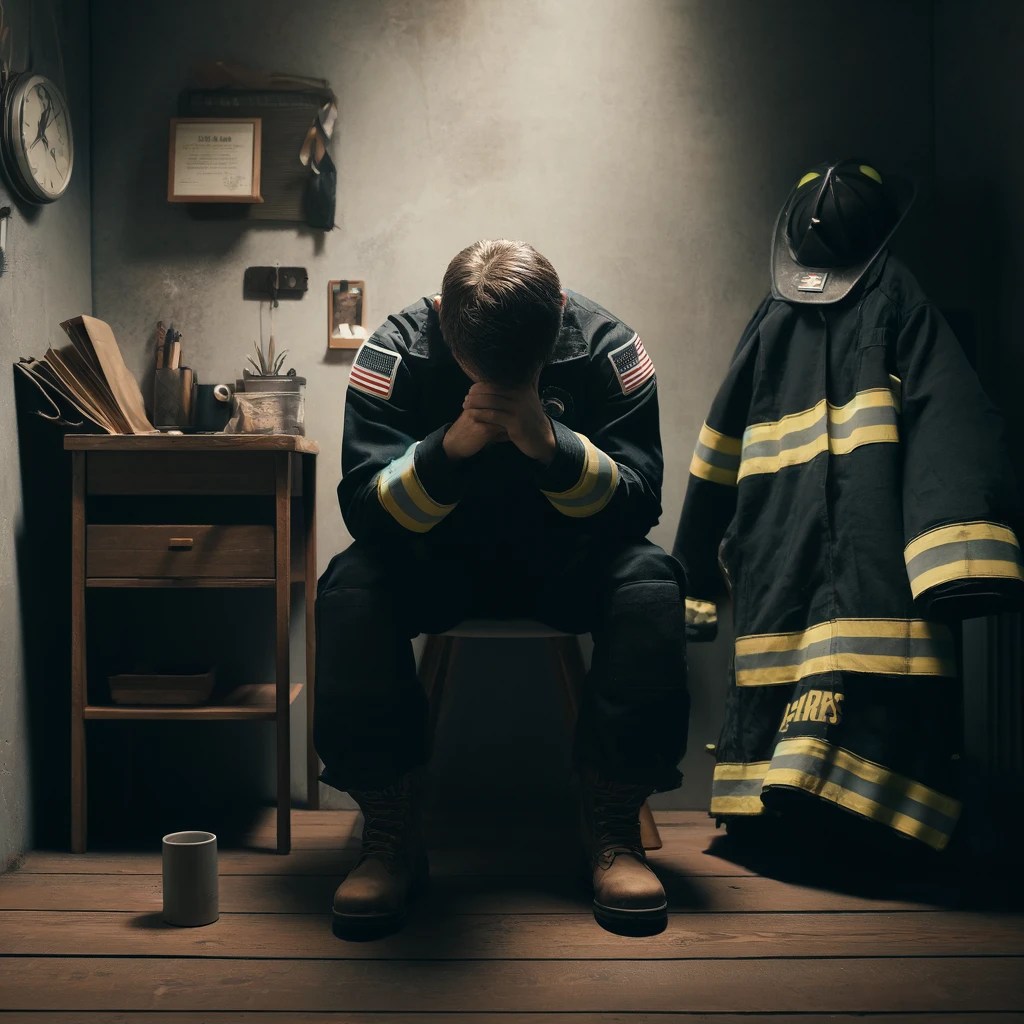
The pager vibrates, the tones drop, the trauma alert is heard overhead, and the adrenaline rush kicks in. For first responders and healthcare workers, this cycle is the rhythm of life. We’re the ones who answer the call, who rush in when others run out. We’re the caregivers, the problem-solvers, the ones people count on during their worst days. But what happens when the caregivers need care themselves? What happens when the very people who are trained to be strong for others find themselves struggling? For far too long, the answer has been silence—silence driven by fear, stigma, and the unrelenting pressures of our professions.
I know this silence intimately. For years, I lived it. I’ve been the one who brushed off my own struggles, convincing myself that asking for help would be a sign of weakness, or worse, proof that I didn’t belong in this line of work. There’s an unspoken rule in our world: “If you can’t handle the job, get out of the business.” It’s a mantra designed to weed out those who don’t belong, but it’s also a trap. It keeps too many of us—good, capable, compassionate people—from acknowledging our humanity. It kept me from acknowledging mine.
The demands of this life don’t help. Twelve-hour night shifts, back-to-back calls, and an endless stream of people who need us—there’s rarely time to eat, let alone to seek out therapy or other forms of care. And when we do manage to carve out the time, the resources are often scarce. Mental health care tailored to the unique needs of first responders and healthcare workers is hard to come by. The general resources available are often ill-equipped to address the cumulative trauma and high-stakes pressures we face. It’s easier to push it all down, to tell ourselves, “I’ll deal with it later.” But later never comes—until it’s too late.
That’s what happened to some of my colleagues. I’ll never forget the heartbreak of attending their funerals, standing shoulder to shoulder with others who wore the same uniforms, all of us asking the same agonizing question: Why didn’t they reach out? But I knew the answer. They didn’t reach out for the same reasons I hadn’t. The stigma. The fear of judgment. The crushing weight of shame.
Those losses were a turning point for me. They forced me to confront the reality that even the strongest among us—the ones who seem to have it all together—can struggle to a devastating degree. I realized that if I wanted to continue doing the work I love—and to be the mother, friend, and colleague my loved ones deserved—I had to start taking care of myself. I had to stop seeing my mental health as an inconvenience or a weakness and start treating it as the foundation of everything else in my life.
It wasn’t easy. In the beginning, I felt an almost unbearable sense of shame. Asking for help felt like admitting failure. But I’ve come to understand that it’s the opposite. Asking for help is one of the bravest things we can do. It’s an acknowledgment that we’re human, that we’re not invincible—and that’s okay. It’s okay because we matter. You matter. I matter. We’re irreplaceable in the lives of those who love us, and we’re irreplaceable in the work we do. But to keep showing up—for our families, for our patients, for our communities—we have to put on our own metaphoric oxygen masks first.
Today, I’m no longer ashamed to say that I see a therapist, that I take psychiatric medications, that I’ve prioritized my mental health, or that I’ve set boundaries to protect my well-being. It’s not selfish. It’s survival. And it’s the only way I can continue to do this work without losing myself in the process.
To my fellow first responders and healthcare workers: I see you. I know the weight you carry, the sacrifices you make, and the strength it takes to do what you do. But I also know that strength isn’t about pushing through no matter what. True strength is recognizing when you need support and having the courage to ask for it. It’s knowing that you can’t pour from an empty cup, and taking the steps to fill it—even when it feels impossibly hard.
My Personal Story
In 2023, nine months after giving birth to my daughter, I experienced a complete breakdown of my mental health. Despite the joy of welcoming her into the world, I was overcome by crippling anxiety. Scenes from my work in EMS bled into my personal life, filling my mind with horrifying images of my daughter in catastrophic situations—falling down a flight of stairs, being ejected from a vehicle, or succumbing to SIDS. These spiraling thoughts, compounded by sleepless nights, mood instability, and destructive behaviors in my relationships, pushed me into a downward spiral.
Adding to the pressure of new motherhood—even as a mother of two—I felt I should be able to handle everything. I feared being judged as a bad mother, an incapable professional, and a burden to my family. I isolated myself, neglected my well-being, and lashed out at those I loved most. I stopped eating regularly, and the stress-induced starvation caused me to lose nearly 70 pounds in just nine months. I was physically and emotionally depleted, tempted to relapse, and teetering on the edge of complete collapse. Eventually, I reached my breaking point, culminating in a mental health crisis that led me to seek intensive treatment.
I entered New Freedom Academy, a 30-day intensive treatment facility in Canterbury, New Hampshire, which turned out to be my lifeline. The campus was stunning—a serene environment with manicured grounds and beautifully maintained facilities that fostered healing. Clients stayed in comfortable dormitories and shared meals in a cafeteria catered by a private chef, featuring vegetables grown on-site. Daily activities included classes and therapy sessions in a bright and inviting hall, yoga and meditation led by outside instructors, and opportunities to explore the peaceful grounds. The program wasn’t a locked facility, which gave me a sense of autonomy, but it provided the structure I needed to begin my healing journey.
Each day was carefully structured, with approximately five hours of group therapy modeled like classes. Topics ranged from substance abuse and codependency to self-love, CBT, DBT, and health and wellness. I met with a nurse practitioner to manage my medications, a licensed trauma therapist, and a case manager to coordinate care for my discharge. The staff, many of whom had personal experiences with recovery, created a space of genuine empathy and connection. It was transformational to know that I was not alone and to bond with others from diverse backgrounds—including veterans, professionals, and elderly individuals struggling with isolation.
It wasn’t easy being separated from my daughter, but the staff reminded me that taking this time for myself was an act of love for her. Throughout my stay, my recovery community and family supported me from a distance, sending letters and gifts and arranging video calls with my daughter. What initially felt like a failure turned into one of the most empowering decisions of my life. I left the facility with a renewed sense of hope, better tools to cope with my mental health, and the realization that seeking help is an act of strength, not weakness.
Returning home wasn’t the end of the journey but the beginning of an ongoing process. I worked with a psychiatrist to fine-tune my medications—a painstaking but worthwhile effort that required honesty and patience. I continued therapy, incorporating Eye Movement Desensitization and Reprocessing (EMDR), a technique designed to help reprocess traumatic memories. In EMDR sessions, I was guided by a therapist to recall distressing events while focusing on a series of bilateral stimuli, such as moving my eyes back and forth or following hand taps. This process helped reduce the intensity of my trauma-related emotions and reframed my experiences in a less harmful way. It was difficult but profoundly effective.
I also took steps to rebuild my physical health after months of weight loss and neglect. I focused on a well-balanced diet, reduced caffeine intake, began journaling, and started taking supplements to address high cortisol and oxidative stress levels in my body. I returned to running, meditation, and spending time in nature. I leaned on my recovery community, attending meetings and reconnecting with loved ones. And I started this blog as a way to process my experiences and inspire others to prioritize their mental health before it’s too late.
Slowly but surely, I began to feel stronger. My journey is far from over, but I know I’m on the right path. I’ve learned that to give my best to the people who depend on me—my children, my patients, my colleagues—I must first give that care to myself. And if sharing my story can encourage even one person to seek the help they need, then every step of this journey has been worth it.
The Mission
The stigma won’t disappear overnight, but it starts with us. It starts with sharing our stories, breaking the silence, and reminding each other that it’s okay to not be okay. You don’t have to carry it all alone. There’s help out there, and there’s no shame in reaching for it. Finding and affording the right care can be hard, but it is possible if you deeply explore what is out there with the same fervent effort you dedicate to your career- because ultimately your performance at work, and the longevity of your career, depends on your wellness, and the ability to show up as the best version of yourself.
If you’re struggling, please know this: You are not alone. Your life matters. And the world is a better place with you in it.
 Mind Over Mayday