
Introduction:
The new year holds the promise of fresh beginnings and renewed hope, but for many of us, it can also feel like a daunting reminder of the unresolved struggles we carry. As first responders and individuals in high-stress roles, the toll of trauma and stress doesn’t reset with the calendar. However, the start of a new year offers a unique opportunity to recommit to ourselves—to our healing, our growth, and our resilience.
Mental resilience isn’t about erasing the past; it’s about learning how to carry it more lightly. It’s about equipping ourselves with tools and strategies to face the challenges ahead, not from a place of depletion, but from one of strength and renewal. Let this year be the one where you take actionable steps toward mental well-being. Here are some ideas to help you get started.
1. Embrace the Power of Acknowledgment
Before we can heal, we need to name what’s weighing us down. Trauma and stress often linger because they’re left unspoken or unattended. Reflecting on your experiences—whether through journaling, therapy, or open conversations—is a powerful act of acknowledgment. It’s a way of telling yourself that your experiences matter, that your feelings are valid, and that you deserve to heal.
While acknowledging pain is not easy, it is a critical first step. Remember, healing isn’t about erasing the hurt; it’s about transforming your relationship with it. Start small by identifying moments in your life that feel unresolved and sit with them gently. Allow yourself to feel, process, and, when ready, move forward.
2. Prioritize Rest and Recovery
One of the most overlooked aspects of mental resilience is the importance of rest. For first responders, who are often running on adrenaline and caffeine, rest can feel like a luxury. But rest is a necessity, not an indulgence. It’s in these moments of stillness that our bodies and minds repair and restore.
Consider your sleep hygiene. Are you giving yourself enough time to unwind after your shifts? Are you creating an environment conducive to restful sleep? Simple changes—like dimming the lights, avoiding screens before bed, or developing a consistent bedtime routine—can make a world of difference. And remember, recovery isn’t just about sleep; it’s about finding moments of peace throughout your day, whether through a five-minute meditation, a walk in nature, or quiet time with a loved one.
3. Learn to Regulate Stress
Stress is an inevitable part of life, but how we respond to it can change everything. Developing healthy ways to manage stress is a cornerstone of mental resilience. Start by recognizing your stressors. What situations or thoughts trigger feelings of overwhelm? Once identified, you can begin to address them with intentional practices.
One effective way to regulate stress is through breathwork. When stress strikes, try the 4-7-8 breathing technique: inhale for four seconds, hold for seven, and exhale for eight. This simple exercise can help lower your heart rate and bring you back to the present moment.
Other strategies include exercise, creative outlets like painting or writing, and even laughter. Yes, laughter is a form of stress relief! Don’t underestimate the power of humor to lighten your mental load.
4. Set Intentions, Not Perfections
New Year’s resolutions often come with an all-or-nothing mentality that can lead to burnout or guilt. Instead of setting rigid goals, focus on intentions that prioritize your mental health. For example, rather than resolving to “never feel stressed again” (an impossible standard), set the intention to “respond to stress in healthier ways.”
Intentions allow for flexibility and growth, while perfectionism often sets us up for failure. Give yourself permission to try, fail, and try again. Resilience isn’t about avoiding setbacks; it’s about bouncing back from them with greater insight and determination.
5. Foster Gratitude and Connection
Resilience thrives in the soil of gratitude and connection. Take time each day to focus on what you’re grateful for, no matter how small. Gratitude shifts your perspective and reminds you of the good that exists alongside the challenges.
Equally important is connection. Resilience is not a solo journey. Lean on your support system—friends, family, colleagues, or a trusted mentor. Vulnerability can feel uncomfortable, especially in professions where strength is often equated with stoicism. But true strength lies in knowing when to ask for help. Let this year be the one where you allow others to show up for you, just as you have shown up for them.
6. Celebrate Small Wins
Healing and growth are not linear processes. There will be days when you feel invincible and others when you feel like you’re back at square one. That’s okay. What matters is that you keep moving forward, even if the steps are small.
Celebrate your progress, no matter how incremental it may seem. Did you take a moment to breathe deeply during a stressful call? Celebrate that. Did you reach out to a friend when you were feeling low? That’s a win. Each step you take is a testament to your strength and resilience.
7. Utilize Resources Tailored to First Responders
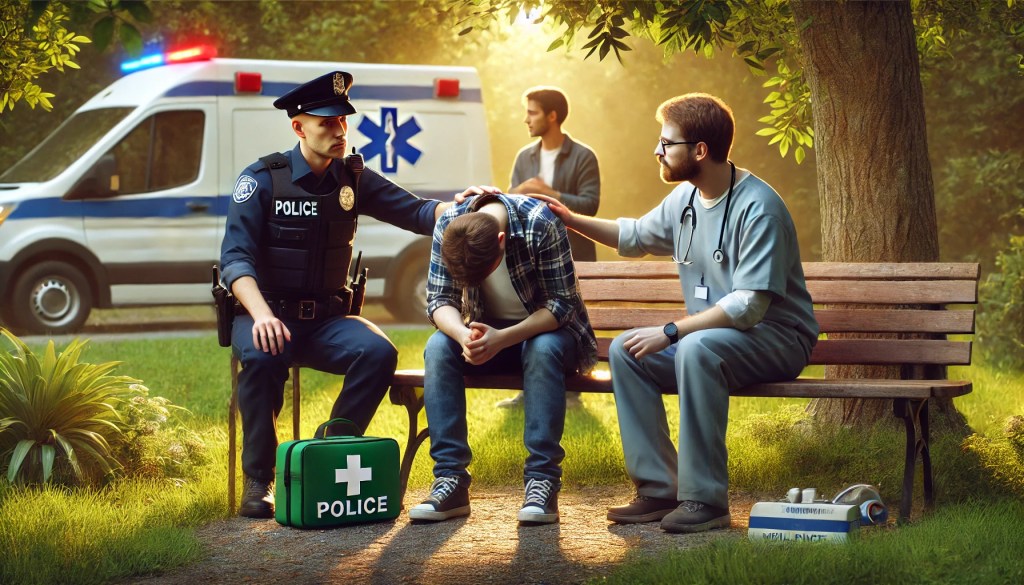
As first responders, we often feel the pressure to “tough it out” and carry on without addressing the mental toll of our work. But the truth is, we all need support sometimes—and it’s okay to reach out. This year, take advantage of resources specifically designed for people like us who face trauma and high-stress situations daily.
One invaluable tool is the 24/7 Debrief Hotline and Peer Support offered by Mind the Frontline. This service provides immediate access to someone who understands what you’re going through. Whether you’ve just come off a difficult call, need to process something that’s been weighing on your mind, or simply want to talk to a peer who gets it, this hotline is there for you anytime, day or night.
Taking that step to call or talk to someone isn’t a sign of weakness—it’s a sign of strength and self-awareness. Let this be the year you embrace the help that’s available and prioritize your mental well-being.
Challenging Negative Thoughts and Reprocessing Them
Our minds can often be our toughest critics, especially when we’re dealing with trauma and stress. Negative thoughts can creep in and become so loud that they feel like the truth. These thoughts—whether self-critical, hopeless, or fear-driven—can keep us stuck, preventing us from fully healing. But the good news is that we can challenge and reprocess these thoughts, turning them into stepping stones for growth. The following practice has made a monumental difference in how I think about traumatic experiences, especially ones where I’ve questioned myself or my performance, and have held on to guilt or shame surrounding a negative outcome.
Step 1: Recognize the Thought
The first step to challenging negative thoughts is to become aware of them. Often, they run in the background like a looped recording. Pay attention to moments when you feel anxious, overwhelmed, or down, and identify the thought behind those feelings. For example, you might catch yourself thinking, “I’m not strong enough to handle this.”
Step 2: Question Its Validity
Once you’ve identified the thought, ask yourself if it’s really true. Negative thoughts are often rooted in fear rather than fact. Use questions like:
- Is there evidence to support this thought?
- What would I tell a friend who thought this way?
- Am I jumping to conclusions or assuming the worst?
Challenging the thought helps weaken its grip and allows you to see a more balanced perspective.
Step 3: Reframe the Narrative
After challenging the negative thought, reframe it into something more constructive and compassionate. This doesn’t mean ignoring the situation, but rather shifting the narrative to one that is kinder and more empowering.
For example, instead of thinking, “I’m not strong enough,” try rephrasing it as, “I’ve faced difficult things before, and I’ve made it through. I am capable of doing hard things.”
Step 4: Replace the Thought with Action
Sometimes, the best way to combat a negative thought is to prove it wrong through action. If the thought is, “I’ll never make progress,” take a small step forward—something that counters the thought, like practicing a self-care routine or tackling a task you’ve been avoiding. Each action builds confidence and weakens the power of negative thinking.
Step 5: Use Reprocessing Techniques
For deeper work, consider techniques like Eye Movement Desensitization and Reprocessing (EMDR) or Cognitive Behavioral Therapy (CBT). These methods help you reprocess trauma and restructure the way your brain responds to distressing thoughts and memories. Working with a therapist trained in these approaches can help you make significant progress.
Step 6: Practice Self-Compassion
Remember, negative thoughts are often rooted in past experiences and learned behaviors. Reprocessing them takes time and practice. Be patient with yourself and celebrate even the smallest victories. Self-compassion isn’t a luxury—it’s a necessity for growth and healing.
Remember
Challenging negative thoughts is like retraining your brain to work for you rather than against you. It’s not about eliminating every negative thought, but learning to navigate them in a way that empowers you rather than holding you back. As you enter this new year, make a commitment to tune into your inner dialogue, challenge the negative narratives, and reframe them into something that aligns with your resilience and strength.
You are more capable than your doubts may tell you—and you have the power to rewrite your story.
Conclusion:
This year, I challenge you to prioritize your mental health as fiercely as you prioritize the well-being of others. Trauma and stress may be part of our stories, but they don’t have to define us. With intentional steps, we can learn to carry our burdens more lightly and build the resilience needed to thrive.
As you step into 2025, remember that resilience isn’t about being unbreakable. It’s about bending without breaking, healing without rushing, and growing without limits. Take the time to honor your journey, invest in your well-being, and embrace the strength that comes from choosing yourself—again and again.
Together, we can create a stronger, more resilient community—one step, one day, and one call at a time.







 Mind Over Mayday