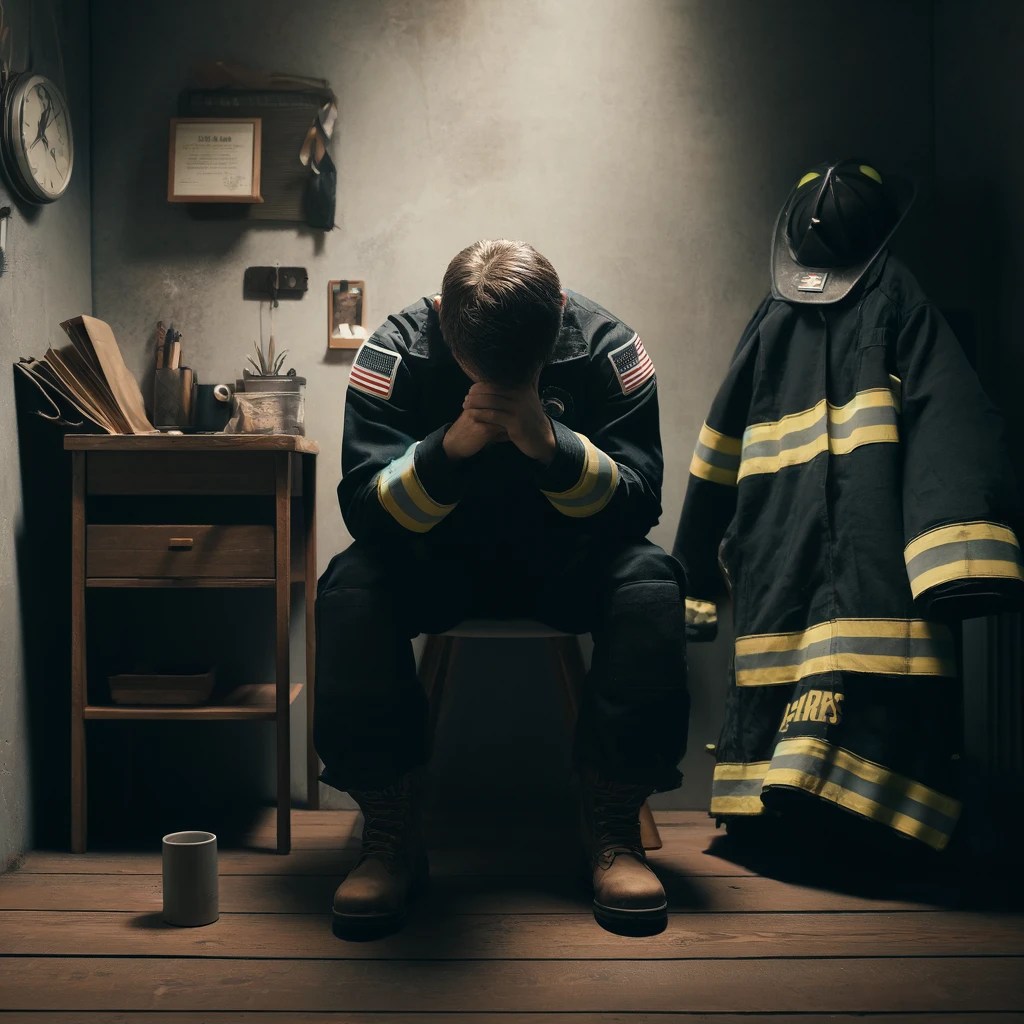
First responders and healthcare workers are often seen as the people who run toward danger, chaos, and pain when others turn away. We are the caregivers, the fixers, the steady hands in a storm. But what happens when the caregivers need care themselves? What happens when the healers need healing?
For a long time, I believed I had to be invincible. The unspoken rule in our world often feels like this: if you can’t handle the heat, get out of the firehouse, ambulance, or hospital. You don’t show weakness. You don’t admit to struggling. You push through. And if you can’t, there’s a pervasive sense that maybe you shouldn’t be in this field at all.
These beliefs are not just whispers in our heads—they’re reinforced by the environments we work in. The long shifts, unpredictable hours, and the emotional weight of the job leave little time to process what we experience, let alone seek help. And when we do consider reaching out, we face limited resources, long waitlists, and a troubling lack of mental health services tailored to the specific needs of first responders. On top of it all is the fear of judgment: Will my coworkers see me as weak? Will my supervisors think I’m not cut out for this job?
I’ve been there. I’ve carried the shame of needing help and told myself I didn’t have time to seek it. For years, I believed that asking for care would mean I wasn’t strong enough to keep doing the job I loved. It took the suicides of several colleagues—dear friends and mentors who I admired deeply—for my perspective to change.
When Sawyer Coleman and Scott Latulippe died by suicide, it shook me to my core. I served with the Maine EMS Honor Guard at their funerals, and it was a challenge to remain stoic in my role when the gravity of their deaths moved us all to tears. These were people many looked up to, people who were thought of as unshakable. People who others relied on, whose families and close friends remember as being positive, humorous, and calm in the midst of even the most traumatic of calls. And yet, they were quietly battling mental health struggles that ultimately led them to making devastating and permanent decisions. Their deaths forced me to confront the reality that even the strongest among us can be brought to our knees by the weight of this work. It was a wake-up call—not just for me but for so many others in our field. It made me realize that ignoring our mental health doesn’t make us stronger; it makes us vulnerable in the most dangerous way possible.
We need to ask ourselves some hard questions: What good am I to my patients, my coworkers, or my family if I’m running on empty? How can I continue to serve others if I refuse to care for myself? The answers are painfully clear. We are irreplaceable to the people who love us. Our children and families need us. Our colleagues rely on us. And to show up for them, we have to show up for ourselves first.
That realization changed everything for me. I stopped seeing self-care as selfish or weak and started viewing my mental health as essential to my career. I began to prioritize my wellness in ways I never had before—therapy, support groups, time to decompress, and creating boundaries around my work and personal life. I also became vocal about these changes, hoping to break the stigma and encourage others to do the same.
It hasn’t been easy. There are still moments of doubt and guilt. But I’ve learned that vulnerability is not a weakness; it’s a strength. Asking for help doesn’t mean you’re failing—it means you’re fighting to stay in the fight. It means you’re choosing to protect your ability to care for others by caring for yourself.
The work we do as first responders and healthcare professionals is vital. But so is our well-being. If there’s one thing I want my colleagues to understand, it’s this: You are not replaceable. You matter—not just to your patients and your team but to the people who love you. Filling your cup first isn’t just an act of self-preservation—it’s a gift to everyone who depends on you.
If you’re struggling, please know you’re not alone. There’s no shame in needing help. In fact, seeking it might just be the bravest thing you ever do. And if sharing my story can make even one person feel less alone or encourage them to take that first step, then every word I’ve written here has been worth it.
Let’s continue to care for each other—and ourselves. Because this work, this life, this mission—it’s worth it. And so are you.
 Mind Over Mayday